
Cash Usage in Southern Europe: A Time of Change?

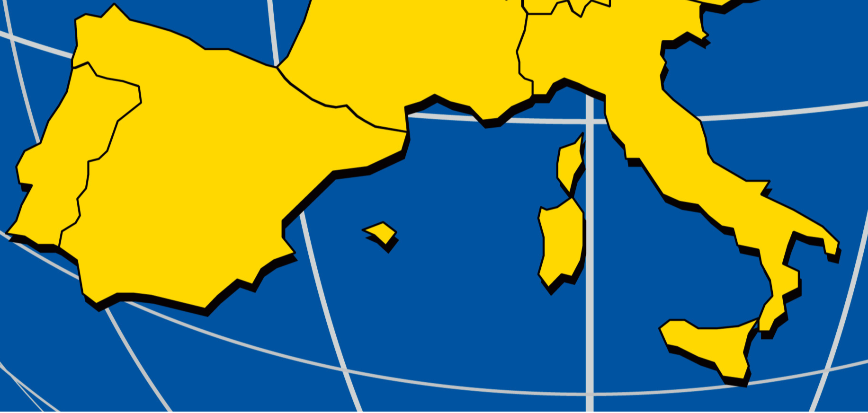
Outman Consulting has published a review of cash usage in Southern Europe, focusing on Italy and Spain. It surveyed 2,000 consumers in Italy and Spain in January 2021 to understand the impact on payments of the pandemic. It found that, for purchases under €10, the preference for using cash had declined from 78% to about 48%. Why and will the change stick?
The review suggests four reasons for Southern Europe’s love of cash:
The retail structure: 80% of shops are small compared with other countries. This is unusually high. At the other extreme, in Finland, a country with little cash use, 50% of retail sales are accounted for by three chains of shops. Smaller shops cannot necessarily afford the infrastructure needed for digital payments or to carry the fee costs that come with them.
The shadow economy: Although hard to estimate, the 2020 estimate for Italy was 11.9% of GDP according to the Italian National Statistics Institute (ISTAT). The Spanish figure was estimated to be 11.2% in 2018.
Population age: 23% of Italians and 19% of Spaniards are over 65 years old. Older people are often more fearful of trying new technology solutions.
Culture: The report quotes the social anthropologist Geert Hofstede who identified uncertainty aversion as being high in Southern Europe, which may, again, help explain preferences for cash.
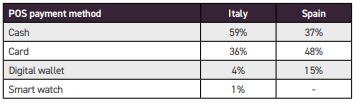
During the pandemic payment behaviour has changed. In Spain cash payments fell 50% and in Italy 25%. Based on their survey, 42% of those who had preferred to pay with cash now use cards.
At the start of the pandemic in Spain, only 55% of cards were contactless enabled, and this may help explain why digital wallets are so popular there.
Governments took action to boost electronic payments. In Spain the contactless limit was increased from €20 to €50. Italy introduced a cashback scheme to boost electronic payments. It also introduced a lottery where entry was free if you paid electronically.
Will the change remain post-pandemic?
Other factors that will have played a part in this change in cash usage include Spain and Italy having the highest share of smartphone ownership per capita in Europe, and this will persist.
In Spain a number of banks have collaborated to create a digital payment method called Bizum. It has 12 million active users. In the survey, half of those using it had signed up since the pandemic started and 69% had used it in the last month.
37% of Spaniards and 30% of Italians are clients of a digital bank.
According to Outman Consulting, in five years’ time Millennials (those born between 1977 and 1993) and Gen Z (1997 to 2012) will make up the majority of the workforce in Southern Europe. Sometimes called the ‘digital first’ generation, they are likely to be comfortable with electronic payments.
The final part of this story is the introduction of cash payment limits. In 2022 Italy will enforce a payment limit of €1,000 and Spain is considering introducing this change as well.
Subscriber content
Read the full article
Full access to Cash & Payment News articles, newsletters and archives.