
Payment News

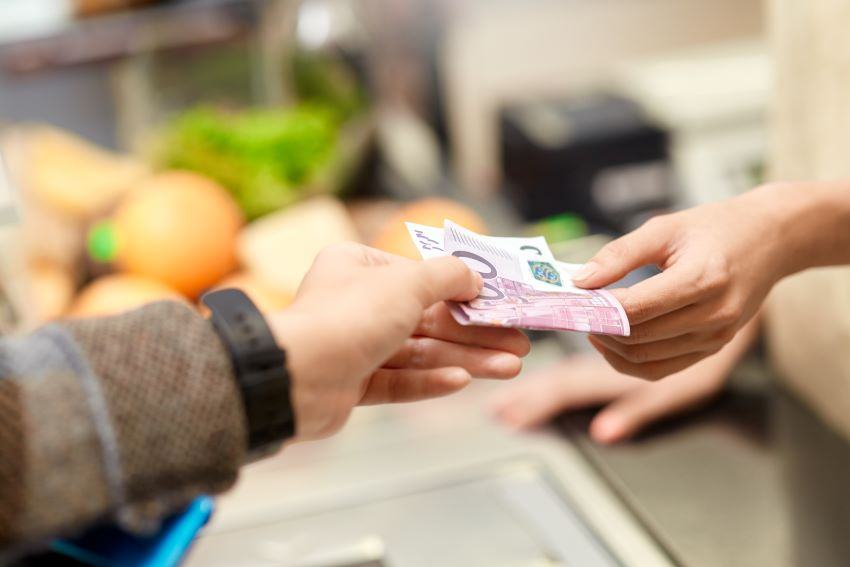
More Analysis of Amazon v Visa
Amazon has announced that from 19 January 2022 in the UK it will stop accepting Visa credit card payments due to their high cost. This follows the post-Brexit removal of the interchange cap imposed by the European Commission. Amazon has also introduced surcharges on Visa credit cards in Singapore and Australia.
While most global online purchases are not made with international credit cards, in the UK 52% of payments were made using credit and debit cards and Visa accounted for 82% of those. Mastercard has about 38 million credit cards on issue, with Visa close to 20 million (GlobalData).
Amazon’s action points a spotlight on card fee structures and is likely to prompt a wider review of what payments cost. Amazon’s position is that costs ‘should be going down over time with technological advancements, but instead, they continue to stay high or even rise.’ Cost isn’t, perhaps, the only driver here. For example, Mastercard is Amazon’s credit card issuing partner and this move is likely to drive business to Amazon Platinum Mastercard. There is also a view that there has been a general lack of innovation in the payments space.
There is an argument that technology combined with open banking is creating new lower cost payment options, changing the relationship between businesses and payment providers. This includes the option for Account-to-Account payments which, using open banking, allow money to leave the purchaser’s bank account and go directly into the business, missing out the expensive middleman.
Amazon has sufficient market power, including consumer loyalty, to take this step without suffering a significant loss of business. Other retailers may not be able to follow their example. For those, it makes Amazon even more competitive.
New ATMs help Piraeus Bank Reduce its Environmental Impact
Piraeus Bank, a Greek financial services company, has introduced 300 Diebold DN Series™ ATMs. These ATMs are capable of automatic cash recycling. These new ATMs use much less power, creating lower CO2 emissions as a result.
The ATMs generate real-time data, so that if there is an incident the root cause can be identified remotely. An appropriately trained technician and spares can be allocated, and the duration of the work required can be accurately assessed.
The DN series of ATMs is made of recycled and recyclable materials and is 25% lighter than most traditional ATMs. This reduces CO2 emissions, both in the manufacturing and transportation of components and terminals. They also use LED technology and highly efficient electrical systems, resulting in up to 50% power savings versus traditional ATMs.
Who Would Bet Against the e-CNY Proving to be a Success?
Payments Journal recently ran a piece about the rather moderate take up of the e-CNY (the Chinese digital currency) to date. One of the emerging concerns about CBDCs in 2021 has been whether the public would actually use them if launched. Hence the e-CNY pilot is being watched closely.
In the key places where the trial is taking place, the People’s Bank of China (PBoC) has encouraged its uptake by using free lottery type promotions and discount deals to encourage people to download the e-CNY app and digital wallet. Despite that, the central bank’s numbers are that the average spend per transaction was under a dollar.
Perhaps surprisingly, given the e-CNY is well suited to internet use, on China’s ‘Singles Day’ in November, only limited promotions were run. One retailer who did make it a payment option was JD.com Inc. 100,000 customers placed 240,000 orders using the e-CNY. JD enjoyed $55 billion of sales but did not say how much was transacted using the e-CNY. During the 11 days the Singles Day sale is on, orders worth $85 billion were spent on Alibaba, which did not have the e-CNY as a payment option.
Mu Changchun is responsible for the e-CNY project at PBoC. In November he made the comment that the ‘acquiring environment’ remains a work in progress and is a primary factor holding back a full-scale launch, along with issues related to completing the risk-management and regulatory frameworks.
It is perhaps unreasonable to compare a limited pilot of a new payment instrument with the well-established WeChat Pay and Alipay, which have two billion active monthly users. The e-CNY clearly works and is being developed and refined all the time. It may have had only moderate adoption to date but when it is fully ready and PBoC moves from pilot to a full launch, no doubt WeChat Pay and Alipay will have it as a payment option, Alibaba will allow payments in it and its usage will rise.
Super App (and Payment) Company Grab Valued at $40 billion
Grab is a Sout East Asian 2012 start-up which has created a digital wallet. During the pandemic it partnered in Malaysia and Indonesia to help distribute pandemic relief funds. In Indonesia it set up dozens of drive-thru COVID vaccination centres.
Grab started as a mobile taxi booking app in Malaysia but now acts as a ‘superapp’ for food services, groceries, e-commerce services, ride hailing and cashless payments. It now works with drivers across Vietnam, Cambodia, Malaysia, Singapore and the Philippines. It made its debut on Nasdaq on 9 December as part of a Special Purpose Acquisition Company with Altimeter Growth Corp, valued at about $40 billion.
Subscriber content
Read the full article
Full access to Cash & Payment News articles, newsletters and archives.