
Payment News

Mobile Money Agents Lose Out
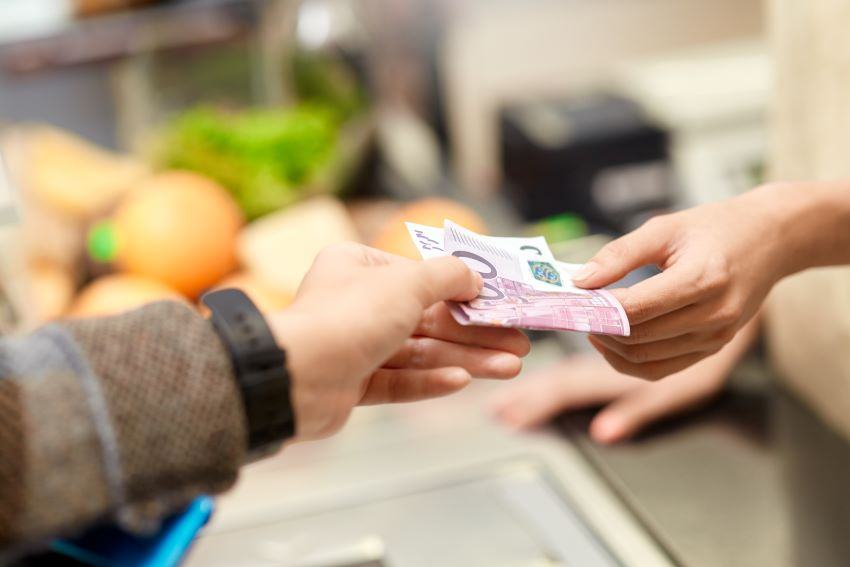
Mobile money systems, of which M-Pesa is the best known, are evolving to the detriment of the network of agents who handle their transactions, according to a recent article in The Economist magazine. Mobile money systems allow people to transfer money using their phones without the need for bank accounts. The agents both accept and hand out cash that is transferred through the system.
There are now 3 million agents in Africa, according to The Economist, which is the same number as all the ATMs in the world. The agents are paid a commission on transactions by the mobile operators. Their role requires them to manage the balance between the electronic float on their account and the physical cash they hold. The Boston Consulting Group estimates it costs $1,000 to set up business and ten months to recoup that investment.
The number of agents is increasing faster than the increase in the volume and value of transactions. GSMA, which represents mobile operators, estimates that the average sum of money handled in and out by agents fell from $11,700 per month to $9,900 between December 2016 and December 2021. In Kenya the number of agents rose 43% during the first year of the pandemic. At the same time commissions fell 17% to about $17 per week. If mobile money is part of a shops offer, helping attract customers into the shop, such a drop is perhaps not critical.
Digital cash is the long term challenge to the role of the agent. If mobile money is used to pay bills and to pay for everyday transactions without using cash, agents earn no commission. In 2012 for every dollar paid into mobile money transactions using cash, $0.88 was cashed out. In 2021, $0.67 was cashed out. Mobile money transactions that did not use cash in shops and online doubled in the last year. The mobile operators make more money on digital transaction compared with cash movements.
Payment Fraud a Huge Problem
£1.3 billion was stolen by authorised and unauthorised fraud in the UK in 2021. A further £1.4 billion was attempted but prevented by the banks and finance industry.
While unauthorised crime fell, perhaps because of strong customer authentication and investment in technology, authorised fraud rose by 39%. Authorised Push Payments (APP) were responsible for £583.2 million of losses with over 195,996 incidents. £214.8 million was lost due to impersonation scams, £171.7 million investment scams and £64.1 million to purchase scams, although these represented 51% of the number of incidents. Only 47% of victims had their losses reimbursed.
The UK is introducing legislation, the Economic Crime and Corporate Transparency Bill, to give new powers to allow information sharing and tracking stolen money.
Smart Card Supply Issues to Last Longer
The Smart Payment Association has warned that disrupted supply chains and production shortfalls in the semiconductor industry are likely to continue for at least 18 months. In addition, suppliers are experiencing delayed deliveries of plastic, metal and other materials used in card production.
In 2021, 2.63 billion smart payment cards and modules were shipped, less than the market demand. In the short term organisations are holding less stock and concentrating on more accurate forecasting. Lead times are said to have increased by four to five months.
One challenge is that Ukraine is home to two companies that produce half of the world’s neon supply, Ingas, based in Mariupol, and Cryoin, based in Odessa. Neon is used to control specialised lasers required in the production of semiconductors. The average wholesale price of industrial-grade neon is said to have gone up nine-fold in China since the invasion.
The Nilson Report says the price for finished, first-use plastic cards will increase by 5-20% this year and next.
Payment Behaviour Changing, Slowly, in Germany
The results of the 2021 Bundesbank payments survey and payment diary shows cash payments falling from 74% in 2017 to 58% in 2021. By value cash payments fell from 48% to 30%. Despite that, on average people have €100 in cash on them and more at home. For a third of people cash is their preferred means of payment and 69% see continued cash usage as important.
40% of respondents to the Bundesbank survey choose to use cards, or other means, to pay. Debit card payments now account for 23% of transactions. The average value has fallen slightly, which is consistent with an increase in their use for everyday payments. Credit card usage has increased to 6% of transactions and they are used for higher value purchases.
Internet payments have increased sharply, rising to 5% of all transactions. At the same time the spread of mobile devices enabled for payment has increased. 17% of respondents had smartphones capable of payments and 27% had a fitness bracelet or smartwatch with a payment function.
Despite that the number and value of mobile payments is low at 3%. About 75% of the population have access to real time transfers, with a third of those having this free of charge.
92% of respondents continue to hold accounts with banks or savings banks. Trust in technology companies, as well as start-ups and FinTechs, is low: only 15% and 13% respectively of the respondents rely on these companies for data protection.
Only 4% of respondents have crypto tokens, an increase of 1% compared with 2020. At the time of the survey and payment diary, a further 4% planned to buy crypto tokens in the near future. Of those who had purchased crypto tokens, 85% saw them as an investment and 8% primarily as a means of payment.
What Next for the European Payment Initiative?
A recent interview with the CEO of the EPI Interim company explained the impact of a number of banks withdrawing from the scheme and the reset that has been necessary.
With the largest Spanish bank withdrawing, some of Germany’s largest banks felt the ambition to introduce a payment card to rival Visa and Mastercard would no longer work, and so they also withdrew. The withdrawal of banks from Spain, Germany, Poland and Finland, although leaving 11 of Europe’s biggest banks and two big European acquirers (Worldline and Nexi), meant that a European card was no longer viable.
The new focus is on an account-to-account instant payment solution for all kinds of use cases, all through a wallet.
Subscriber content
Read the full article
Full access to Cash & Payment News articles, newsletters and archives.