
Will Less Cash Lead to Debt?

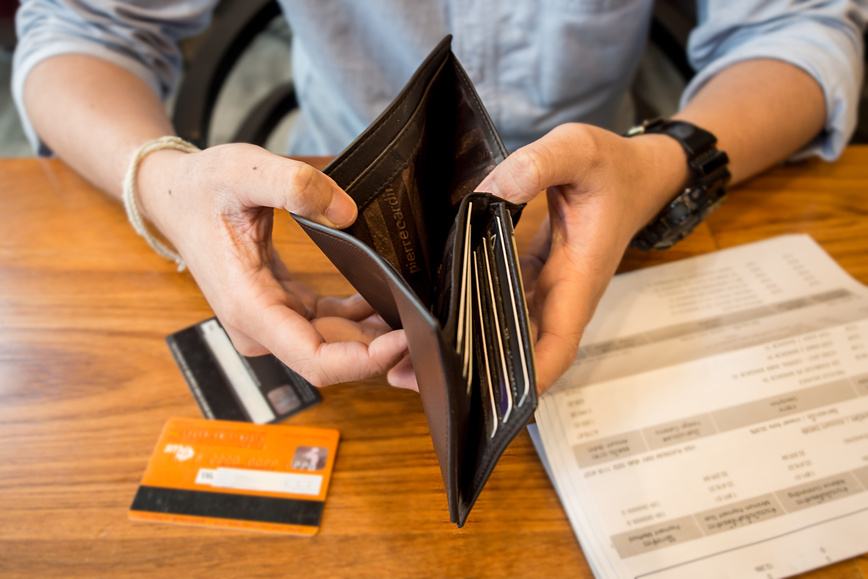
A website, Scitechdaily, has written about what they refer to as the ‘cashless’ effect, the increased willingness to buy things when physical cash does not change hands.
The theory was established by Elizabeth Hirschmann in 1979. A survey conducted in a number of branches of a department store recorded what people bought and what they paid with. People who used a store or credit card made larger purchases than those using cash. It also found that people with a choice of cards spent the most.
Research has built on this initial work finding that compared with people who use cash, people who use cards are happy to spend more and are less likely to recall their past expenditures. They tend to concentrate on and remember product benefits rather than costs. Finally, they are more likely to make more unplanned, indulgent and unhealthy purchases.
Research basis
Two key pieces of work stand out in explaining this finding. Richard Feinberg in 1986 showed half of a group of volunteers pictures of products and the other half pictures with a Mastercard logo. The question asked was how much they would pay. Those who had seen the Mastercard logo were more willing to buy, were happy to pay more and made their decisions faster.
Feinberg’s explanation was that credit cards are associated with spending and so the volunteers were more willing to spend. People also remembered the positive feeling that can come with spending.
An alternative view is that there is less psychological pain when no actual cash changes hands, no ‘pain of payment’. People don’t have to think about the cost at the moment of purchase, separating the pleasure of buying from the pain of paying.
The fact that debit cards create the same effect suggest it is not the delay in payments but the disassociation from the pain of payment from the moment of payment. It appears to be much easier to part with money when it isn’t tangible.
A more recent study used an MRI scanner to map brain activity when considering payment. It found that the reward centres in the brain are triggered when buying with cards irrespective of the price. However, when paying by cash this only happened when buying cheaper items.
The researchers believe that our prior positive experience of buying things by card, which we associate with the logo of the card companies, activates the reward centres in the brain more than the psychological pain of paying for them. The result is that we are less sensitive to the price.
Implications for a cashless society
There is a risk, of course, that as we move to a less cash society, overspending might become more of a problem – Buy Now Pay Later may make this even more of a risk. But a 2021 meta-analysis of research carried out since 2004 shows that the cashless effect is weakening.
Is this because we can all now check our bank balances quickly and easily, so payment is more visible, or because such a high proportion of our payments are digital that we now understand the ‘loss’?
Spend less, use high denomination notes
Perhaps the ‘friction’ of two factor authentication will slow down spending. The authors suggest leaving your cards and most of your cash at home, making impulse purchases harder.
Another solution may lie in a further article in Scitechdaily, about what it called the ‘denominational effect’, how we behave if our wallets have high or low denominational notes in them. Why are we more willing to spend lower denomination notes than high?
A study into the denominational effect was undertaken by Professors Priya Raghubir and Joydeep Srivastava in 2009. They ran research with students where they thanked them for taking part with small sums of money to keep or spend on snacks. One group was given four 25 cent coins and another group a dollar bill. 63% of those with coins bought snacks, 26% of those with the note spent it.
To make this more realistic, 75 customers at a fuel station were surveyed and then given either a $5 note or five $1 notes as a reward. One in six of those with the $5 spent it in the fuel station compared with one in four with the $1 note.
The research was then repeated in China, where 150 housewives were given money for completing a survey. Some received one CNY100 note, equivalent to $14.63 at the time, and some five banknotes adding up to CNY100. Twice as many of those given five banknotes compared to those given one decided to buy something. The women given one banknote who spent some of it were less satisfied with their purchases than the others. The higher value banknotes were said to be ‘painful’ to spend.
The three studies also suggested that once a higher value note is used, those people often spent more than those given the equivalent amount in lower value notes. Researchers used the phrase, ‘what the hell’ effect to understand this behaviour.
One theory is that we tend to perceive high denomination notes as being higher value because of the greater fluency we experience when we process the large denomination relative to many small denominations. Some argue that many people use larger bills to partition their money into different ‘budgets’ to help them control their spending.
The original proponents of the denominational effect see large denominations as psychologically less fungible than smaller ones. People feel they are less easily spent. For those who wish to save, this is helpful. Assistant Professor of Marketing Helen Colby designed and carried out a study that showed that large notes are almost as good as physical envelopes when it comes to helping us keep track of our money and limit our spending.
Another theory proposed by Thomas Gilovich and Gary Belsky in 2012 suggested that we consider small denomination banknotes as ‘petty cash’ to be spent, whereas larger banknotes are thought of as ‘real money’ to be spent on things of great importance or saved for a rainy day.
Finally, it could be that we are reluctant to break large notes because doing so would generate smaller denominations in change which are just less valued, particularly if coins are involved.
The answer seems to be that if you want to spend less or keep track of your spending, draw out higher denominational notes from the ATM – having ‘real money’ may deter your spending.
Subscriber content
Read the full article
Full access to Cash & Payment News articles, newsletters and archives.