
Carbon Offsetting – What, Where, How?


Carbon offsetting is a much talked about option but poorly understood. It may feel like ‘cheating’ or not delivering genuine benefits to reduce carbon emissions.
This article looks at the why and how of carbon offsetting to answer these questions.
Why focus on carbon emissions?
Climate experts have identified carbon emissions as the primary cause of climate change currently being observed. Before the industrial revolution, natural phenomena such as volcanic eruptions drove the change. Since the industrial revolution, which saw a dramatic increase in carbon emissions that continues today, the global temperature has risen faster than previously.
During the 20th and 21st centuries, the level of carbon dioxide has risen by 40%. Today, there is more carbon dioxide in the atmosphere than there ever has been in at least the past 800,000 years.
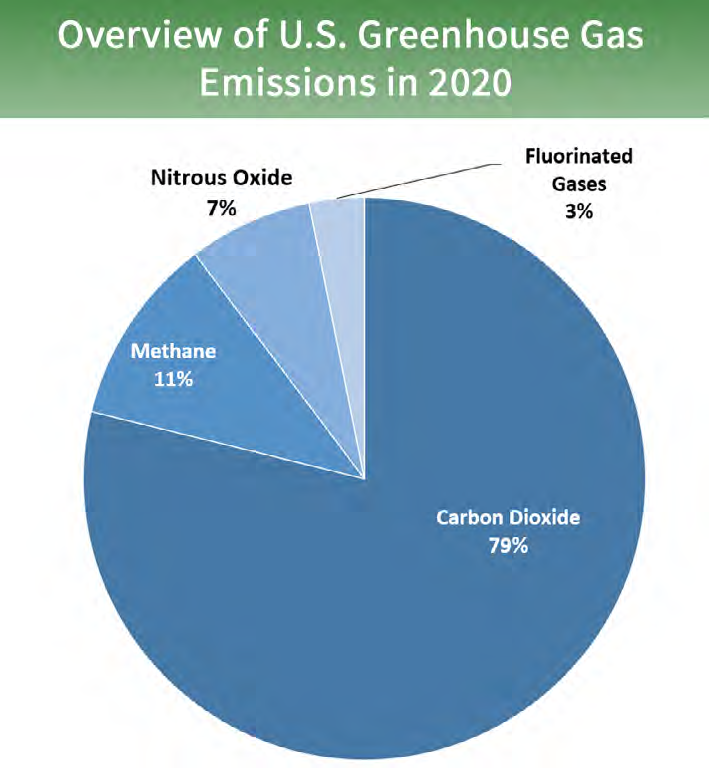
Carbon emissions create what is, in effect, a warming blanket around the Earth that traps heat, changing the planet's climate. The emissions that create this warming blanket are known as ‘greenhouse gases’ (GHG). In fact, the Kyoto Protocol names and measures seven gases: carbon dioxide (CO2), methane (CH4), nitrous oxide (N2O), hydrofluorocarbons (HFC), perfluorocarbons (PFC), sulphur hexafluoride (SF6) and nitrogen trifluoride (NF3).
Carbon dioxide is the predominant gas, which is why the term ‘carbon footprint’ and reference to ‘carbon emissions’ are used. The carbon footprint is measured as a number of CO2 equivalents, CO2e. Standard ratios are used to convert the various gases into equivalent amounts of CO2, based on their global warming potential (GWP).
Why focus on carbon offsetting?
Many countries have set legal commitments to reduce their greenhouse gas emissions on their journey to achieving Net Zero, a stage where the amount of carbon dioxide we add to the environment is no more than the amount taken away. For the UK, the target is 2050, whereas other countries, such as Sweden, are committed to achieve this sooner.
There are two reasons to consider carbon offsetting:
It is likely to take time to implement changes to reduce your organisation’s GHG emissions. In order to reduce these emissions during this transitionary period, and if you want to have a Carbon Neutral status as you work through your plans and changes, carbon offsetting will be necessary.
It is likely that your organisation will generate some GHG emissions that cannot be avoided.
What is carbon offsetting?
Organisations make a financial contribution to a project outside of their organisation that will offset their GHG emissions. The organisation buys a ‘carbon credit’, with one carbon credit being equivalent to one tonne of GHG emissions that have been avoided or removed.
Once carbon offsetting has taken place (for Scopes 1 and 2 at a minimum), your organisation becomes Carbon Neutral.
Where and how to start carbon offsetting
The starting point is determining what your carbon footprint is and where it lies in your span of control – Scope 1, 2 and 3.
You then know whether and how much carbon offsetting is needed. This knowledge may identify some relatively simple and quick emission reduction opportunities to put you on your reduction pathway and generate financial savings.
The challenge is finding carbon offsetting projects that are:
Real – all emission reductions generated must be proven to have genuinely taken place.
Measurable – all emission reductions must be quantifiable using recognised measurement tools and techniques within standard margins of measurement error, with leakage taken into consideration.
Additional – emission reduction projects must be able to prove that the project is additional and would not have taken place without the help of carbon finance.
Independently verified – to provide sufficient guarantees to buyers, emission reductions should be verified by an approved independent third-party verifier with the expertise necessary in the country and sector in which the project is taking place to provide an adequate level of assurance.
Unique – double counting is prevented using registries that track ownership and eventual cancellation for regulatory compliance.
If an organisation wants others to recognise that it has offset its carbon, then it needs certification to verify that – providing a global benchmark that monitors, reports and verifies what has been done.
There are a wide range of projects available for which carbon credits can be purchased by an equally wide range of project developers. To be confident that the project meets the criteria listed above, then the project and the project developer need to be accredited by one of these three Credit Standards:
1. UNFCCC CDM – Certified Emission Reductions (CER)
2. Gold Standard – Verified Emission Reductions (VER)
3. Verra VCS – Voluntary Carbon Unit (VCU)
The project developer issuing the credits will need to work with their chosen Credit Standard to validate and verify their project and hold their carbon credits on the Credit Standard Registry to prevent double- counting.
This certification provides the infrastructure to issue, trace, transfer and retire the carbon credits.
Carbon credit retirement
‘Retiring’ a carbon credit means that when it is purchased it is removed from the market forever, never to be traded or offset again. This way, only the purchaser of the carbon credit can ever claim to have offset their emissions. The purchaser cannot, for example, claim they’ve offset their emissions and then re-sell the credit.
Organisations can buy carbon credits and then sell them to other organisations. If this is done, then the register needs to show the movement of the credit between counter parties. The carbon credit needs to show who issued it and who bought it in an open registry.
All retirement certificates are held in the public domain, allowing any person or organisation to verify the project type, volume retired and retirement details.
Finding and managing carbon offsetting projects
An organisation can purchase credits directly from a project developer or use an intermediary, a specialist such as THG Eco, that sources and stores credits in their registry, then, at the right time, retires and issues the certification on behalf of the customer.
There are a number of challenges involved in finding offsetting projects that meet the criteria of being real, measurable, additional, independently verified and unique. The market is highly fragmented and finding suitable projects, particularly in inaccessible markets in different time zones, with detailed project, volumes and pricing information can be time consuming and complex.
In some parts of the world the project owner may be working offline, paper- based, with exchange rate complexity and with the need to negotiate the individual trading contract. Any lack of transparency, comparability and trust introduces risk, cost and long lead times. This is why it is common to use specialist organisations to identify projects.
Renewable energy certificate trading
Similar to carbon credit trading, there is a market for buying or selling renewable energy from solar, wind or other green energy sources. This is usually sought when an organisation is looking to offset their Scope 2 emissions without the need to change their energy supplier.
A certificate is issued equal to 1 MWh of electricity and, once this energy has been fed into the grid, the certificate can be bought and sold as an energy commodity. The certification required depends on the regulations in the country where the energy was consumed, and require retirement once purchased for their use to be fulfilled.
Tree planting
A further option is tree planting. Again, platforms now exist for investment in this area for planting to be carried out on an ad- hoc basis, via subscription or automatically.
Tree planting is not carbon offsetting. Whilst tree planting does sequester carbon emissions from the atmosphere, this will only be substantial once the tree has grown and is large enough to accomplish this, providing the seedling doesn’t die/get eaten/be destroyed by wildfire.
Even so, tree planting is still great climate action and something that is positive to do and for an organisation to be involved in. When undergoing carbon footprinting, offsetting or other sustainability work such as an LCA or Net Zero journey, tree planting is a good tool for demonstrating the organisation’s ethos, commitment and overall strategy through visible action. It is also particularly useful for gaining employee engagement.
THG Eco: Project Developer Network
An example of a specialist organisation to identify carbon offsetting projects is THG Eco, who have developed a project network around the world with an ecosystem of over 600 project developers, with access to more than 60 million tonnes of carbon credits. THG Eco evaluates markets and methodologies and works with organisations to match projects to their brief, budget and preferences.
As an additional service, THG Eco works with its delivery partner BeZero Carbon to evaluate the main drivers of change and their effects on the proposed project area and to estimate the potential GHG emission reductions that could be achieved in the project area without compromising conservation objectives. This also involves determining the most suitable carbon methodology. Care is needed to evaluate additionality, the risks of over-crediting, leakage, permanence, and the policy environment of the projects.
This work allows a comparison with the previous pre-feasibility study and a preliminary financial feasibility assessment and revenue scenarios. Only then is a decision made and the appropriate direct investment in these projects arranged.
Who are THG Eco?
THG Eco is a part of THG (www.thg.com), a quoted company in the top 100 FTSE listed companies which has developed an environmental consultancy business called THG Eco.
THG Eco was created to deliver THG’s own sustainability and ESG strategy. THG Eco now uses what it learnt to support its clients, partners and suppliers, as well as other organisations wanting to develop their own plans.
Subscriber content
Read the full article
Full access to Cash & Payment News articles, newsletters and archives.