
IMIA – Making the Case for Cash, and Coins

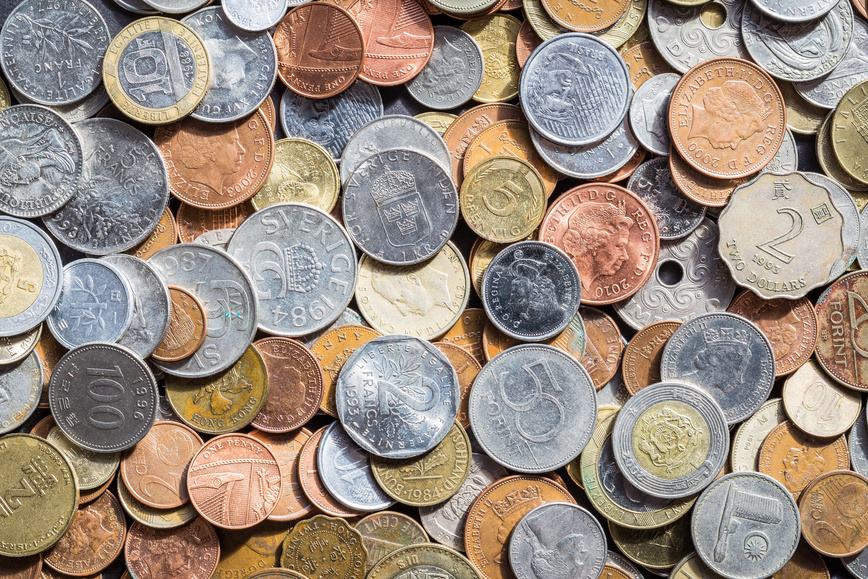
The International Mint Industry Association (IMIA) was founded last year and officially launched this month at the World Money Fair in Berlin, with a specific focus on research and advocacy for coins as part of the cash, and hence payments, ecosystem. IMIA President Gerhard Starsich (GS) and Managing Director Martina Horakova (MH) spoke to sister publication Coin & Mint News™ about the foundation of the new association, the role of coins in the cash cycle, and how the IMIA plans to make the case for their importance, and indeed that of cash overall.
Q: What was the impetus behind the founding of the IMIA? Why now?
GS: It was about time! International card companies and commercial banks invest a lot of money to promote electronic payment products, whereas the promotion of cash by the industry and its consumer and societal benefits has been far too little in comparison.
Selected mints conducted national cash campaigns and international fora offered relevant reports, seminars and conferences, but these were rather inward looking. There was a real need for the mint industry to step in and step up the pro-cash efforts.
We aim to significantly advocate on the global level for cash and coins as an integral part of future financial systems, for society as such and for our industry.
Q: Who is behind the IMIA?
GS: The IMIA is an industry association, constituting of and welcoming both public and private mints and industry suppliers. I am the President of the Board. Marc Schwartz of Monnaie de Paris is the Vice President and Günther Waadt of the Bavarian Mint is the Secretary to the Board. The association is being led by Martina as its Managing Director.
Q: The name is ‘International’, but it appears to be very much European-focused, judging by the founder members.
GS: Thank you for making that comment; the European focus is a misconception. IMIA has indeed been founded by six European mints, but that was purely in order to speed up the foundation process, which I am pleased to say we succeeded in. We are a truly international association.
MH: To add to Gerhard, yes, we are open and engaging with mints and suppliers internationally. Furthermore, we are also active in our advocacy and research across jurisdictions, because we live in a globalised world and issues aren’t purely national. Not just in terms of a globalised economy, but policies and developments in one jurisdiction inspire or take precents in others.
Saying that, yes, it is also about analysing in-depth each jurisdiction and our members’ circumstances individually, in terms of socio-economic, market and governmental structures, to see what works and what doesn’t, and what good lessons and approaches could be applied elsewhere.
In essence, the association is a content and research knowledge management hub, for and on behalf of our members as well as for policymakers.
Q: What are its principal goals and priorities?
GS: IMIA’s vision and mission is to guarantee and protect inclusive, democratic, resilient and sustainable coin and cash access and acceptance as a public democratic good for all.
MH: It aims to increase positive awareness and appreciation of cash and coins for economic resilience, citizens’ privacy and economic freedoms. To do so we are engaging in dialogue not only with policymakers but also, crucially, with consumers and merchants’ associations.
Q: Do you have any specific work programs or plans in place? If so, what?
MH: We have recently published two position papers on the legal tender status of euro cash and the role of cash in society and the economy.
In addition, we are monitoring and already engaging with policymakers on the issue of current coin recirculation challenges. And of course, we do all that by reviewing and analysing initiatives and programmes of central banks and governments to keep abreast and be involved in current and upcoming cash and coin developments, challenges and policy debates affecting the future of the mint industry.
Q: Where do you see the key priorities (and challenges) for mints? To what extent will the IMIA help address these?
GH: The key challenge for the mint industry in the next few years will be to hold its market position. The card companies are fighting to increase their market share in the payment market. Our target is that the customers have free choice for their preferred means of payment. Cash should, in our view, be accepted at all points of sale.
For this we need to explain and inform policymakers and stakeholders about qualities of cash such as higher security level, high speed, high level of data protection, sustainability, financial education and low transaction price.
MH: A key priority for the mint industry also is to improve its environmental footprint. Here, the IMIA wants to promote the progress done by individual mints, but also the research and work underway by the European-based Mint Directors Working Group (MDWG) and the International Mint Directors Association (IMDA).
Q: Will the IMIA be standalone, or will you seek partnerships with related associations?
MH: Both, standalone and in partnership. Standalone, as we are an important voice for cash. There is strength in numbers. Have you seen the ratio of responses to policy issue papers and calls for evidence in the recent years, in terms number of electronic payments interest groups vs pro-cash organisations?
So, we develop and supply our own positions, but we do cooperate and exchange research and analytics with other associations in the space, because unity is of impact.
Now, the standalone voice and knowledge of the mint industry is important, because if there are no coins, there is no change and without change we can’t have cash acceptance.
And where we differ and bring a unique added value is the fact that as mints we are very close to ministries of finance and central banks, and so we have and are strengthening these trusting relationships.
Gerhard Starsich
Subscriber content
Read the full article
Full access to Cash & Payment News articles, newsletters and archives.