
Diebold Nixdorf Positions Itself for the Future

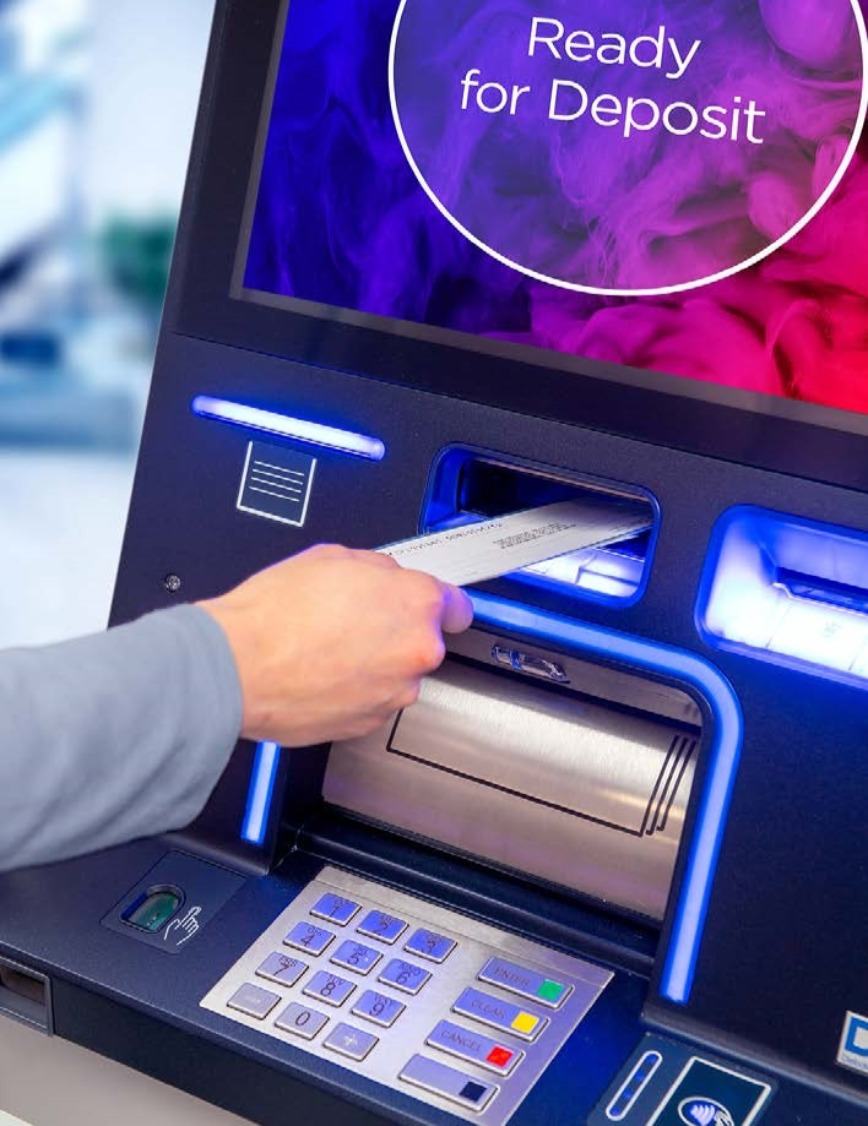
In 2016 Diebold and Wincor Nixdorf joined forces to form Diebold Nixdorf, creating a company with global reach in the self-service market. Diebold Nixdorf serves retailers and retail banks providing ATM and point of sale (POS) technology and software to run and integrate the technology and behind the scenes payment platforms. It also offers management services for all these products.
Cash and Payment News™ spoke to Matt Phillips, VP, Head of Financial Services, UK and Ireland at Diebold Nixdorf, to get the latest on what they are doing.
Retail banking
Many commercial banks have adopted a ‘digital first strategy’, which means they want customers to access the banks’ services online, via an app or using self-service equipment, and only talk to staff where these options don’t meet their needs. The pandemic has accelerated banks’ adoption of this strategy.
Diebold Nixdorf is developing a response to its own digital strategy, enhancing what it does to support the new role of the remaining bank branches and seeking to create a better customer experience.
In this new environment, there is still work to do to make the customer experience better when they contact or visit their bank, which gives Diebold Nixdorf an opportunity. It would also like banks to focus on the customer whilst outsourcing the technology behind banking to Diebold Nixdorf, since it believes it can provide this more cost effectively and better than the banks.
Response to less cash
Matt Phillips suggested areas of focus in response to a ‘less cash’ world.
Firstly, driving cost down through greater collaboration, particularly at branch level. His suggestion was that one partner for IT systems, including regulatory compliance and security, would allow banks to cut costs. This would allow services, including access to cash, to be protected by lowering the break even cost for branches. The introduction of more, and better, self-service equipment is part of this response.
Secondly, more cash recycling. Although this is widespread in Europe, it remains relatively rare in the UK. In busy branches Diebold Nixdorf have seen the need for CIT visits cut dramatically where recycling has been introduced, with all the cost and environmental sustainability benefits that brings. In the UK banks tend not to upgrade equipment but only to introduce different or more modern systems when replacement is necessary.
Finally, a move to a utility banking model would allow a major shift in cash cycle costs. This requires collaboration and partnership between organisations that normally compete, but Scandinavia and the Netherlands are examples of how this can work.
Self-service revolution
Self-service equipment is an important part of changes coming to banking. Diebold Nixdorf talked about a ‘leave behind strategy’ in banking, where banks look to meet the needs of those who want to go to branches and want face-to-face service. This includes banking ‘pods’ and the concept of safe locations where people who are uncomfortable with the digital world can be helped.
Diebold Nixdorf has trialled design concepts in extensive user trials to create intuitive digital tools, including providing support and environments where people can make mistakes and not be embarrassed when they use digital tools. Diebold Nixdorf places great emphasis on having a consistent look and feel across its devices and software to allow people to become used to using them.
New generation ATM performance
ATMs have become somewhat commoditised, but this is changing in line with the changing banking environment.
Diebold Nixdorf has developed a new ATM family, its DN Series, which has a smaller footprint, enhanced security, which can be multi-functional and which looks good. The series is modular to reduce the costs of maintenance and offer maximum flexibility to customers.
Part of Diebold Nixdorf’s offer are the advantages that come from using artificial intelligence and connecting all its devices to optimise performance. Terms such as machine ‘self-healing’ and automatic alerts to operation centres allow maintenance to be targeted and timely. The ATMs have data sensor capabilities, for example analysing the angle that notes flow over rollers to detect problems.
Based on what is called an ‘AllConnect Data Engine’, this gives visibility of the performance of the machine at a branch, regional and network level. The remote diagnosis that this allows increases the time the ATM is operational and reduces maintenance costs.
Although Diebold Nixdorf had developed contactless interactions with its devices before the pandemic, customer demand has increased significantly for this. In many cases, it is possible to retrofit this to ATMs.
The ATM cassette is a well-known source of problems at ATMs – they are where the human touches the machine. Although it has been looked at in the past, cassettes are not standardised across different suppliers.
ATM crime ‘arms race’
The challenge is to stay ahead of the criminal, and this task is more difficult since the internet has allowed criminal techniques to be shared around the world. As a result, Diebold Nixdorf collates and analyses data on ATM crime to be able to brief its customers and develop the protection it offers on its machines – trusted device encryption, regular software version updates, defences against transaction reversal fraud etc.
There is always an issue where purchasing departments specify for low price while operations department face real threats. Diebold Nixdorf regards itself as having a duty of care that means it sets the right specification for the threats its customers face.
Retail
In shops Diebold Nixdorf supplies POS equipment. For cash it provides back office solutions to sort and store cash, including coins. The back office recyclers tend to be found in larger stores given their processing capacity.
Coins remain an element of the cash cycle which is hard to simplify given the inherent nature of coins. The machines that handle them in bulk tend to be large and noisy. Whether in a shop or a bank, where to put these machines is often an issue.
Diebold Nixdorf offers Assisted Teller Safes for both retailers and banks, also known as Teller Cash Recyclers, which can remove the need for staff to handle cash – important given that less handling and processing of cash is a major cost saver. In Europe it is common for these devices to face towards the customer in a bank so that the teller is not involved in handling cash at any point.
Future digital opportunities
Diebold Nixdorf is positioned such that it works with cash and with digital payment across the banking and the retail sectors. It handles cash, it has POS technology and it offers a payment platform working across all types of payment. It provides self-service physical solutions, online solutions and digital solutions working with apps. It sees itself, therefore, as well positioned to offer banks a complete payment technology service, ‘ATM-as-a-service’, ‘infrastructure-as-a-service’.
Diebold Nixdorf also appears to be thinking broadly about the future, willing to innovate and offer very different future solutions based on the knowledge that data linked to the bank’s customer provides.
For example, what was referred to as ‘bridging the gap between channels’, ie. if a customer is applying for a mortgage online but does not complete their application, their bank branch could be notified to allow them to offer assistance to complete the application next time they are in the branch.
Diebold Nixdorf is at the sharp end of the cash cycle, but it is clearly working hard to position itself to serve the cash community and to be a significant payment player in the future.
Subscriber content
Read the full article
Full access to Cash & Payment News articles, newsletters and archives.