‘A Digital Euro is Due, if not Overdue’

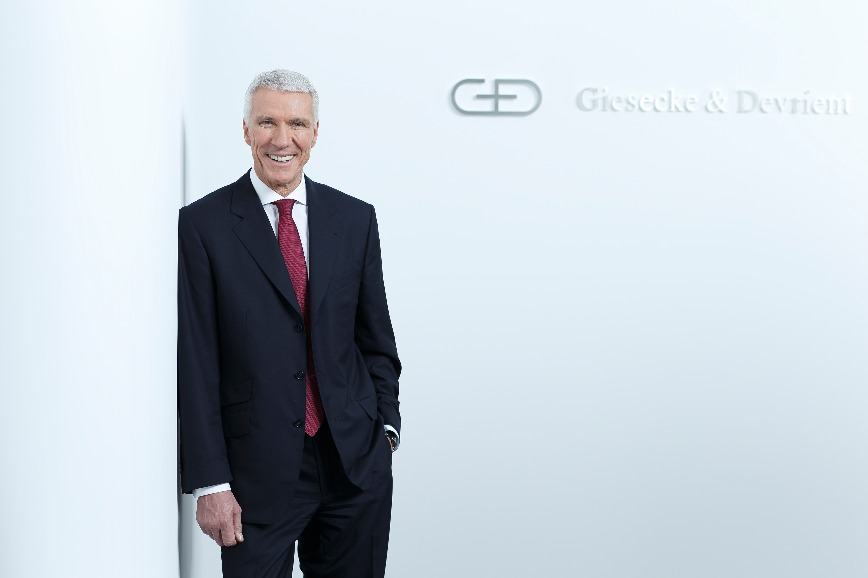
Thus said Ralph Wintergerst, CEO of Giesecke + Devrient (G+D), to the Frankfurter Allgemeine newspaper before Christmas. G+D has invested significantly in this area to position itself for the future and to support its worldwide relationships with central banks. It is confident that cash will remain a core payment instrument but sees a future shift to Central Bank Digital Currency (CBDC).
G+D is working with 20 central banks and governments, with just under 10 of those talks at a stage that could lead to pilots. G+D started 'Project Filia' three years ago to develop the technology for digital money which is backed or supported by central banks.
This speculative investment has required the creation of a capability to create digital money, a distribution system and media that is secure for the storage of virtual money. The major technical challenge has been around safeguarding the currency from criminals. This is a constant task and G+D described their approach as employing 'post-quantum cryptography'.
Wintergerst explained the different focus of central banks around the world. Those in developed economies are focused mainly on how to maintain payment systems and money and to create an effective offer that is safe and anonymous. Data protection is an important part of the design of the currency.
Countries in Africa are more concerned with the immediate challenge of how to get aid to their populations, particularly where there are few bank accounts and the solution must work off-line.
And although China is ahead, at the moment it is domestically focused, with the 2022 Beijing Winter Olympics as the next major milestone. He speculated that China might target Africa for initial international use.
Asked about timelines for a digital euro, Wintergerst thought it would not be quick, but not as long as the physical euro took to prepare and launch. Wherever digital currency will be used, user acceptance is key to success.
He expressed a reservation that Europe has all the ingredients for success but appears to hesitate over such big decisions, perhaps for longer than necessary. The European Central Bank was described as effective at financial policy for Europe. Once a decision is taken, it will be effective at introducing a digital euro quickly.
The Frankfurter Allgemeine’s article finished with a question about the future of cash. Wintergerst was clear: 'whenever it becomes critical – whether it's the financial crisis, natural disasters, or now the corona pandemic – when trust in systems is damaged, people reach for cash'.
G+D is clearly backing two horses in the payment 'race'.
Subscriber content
Read the full article
Full access to Cash & Payment News articles, newsletters and archives.