
MAS Sustainability Report

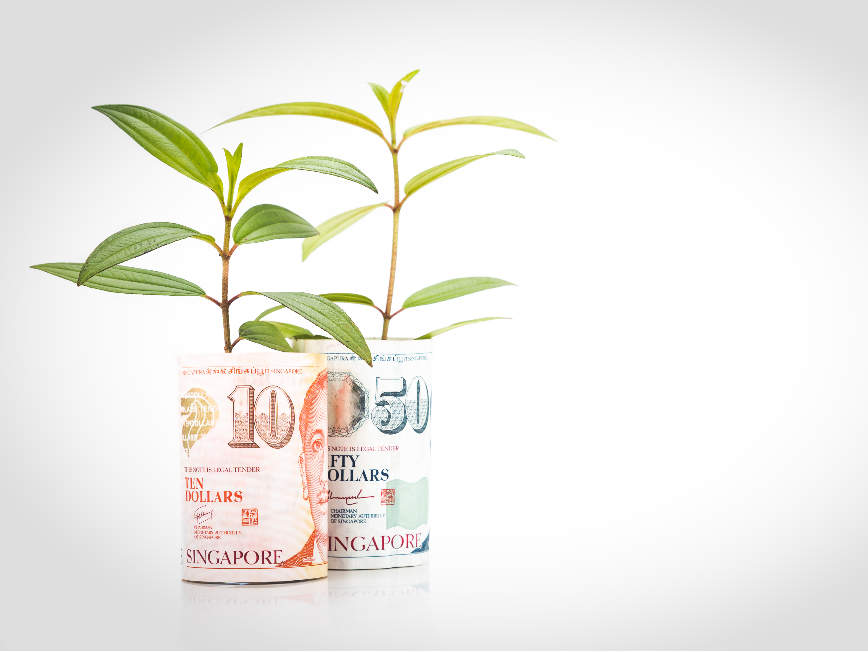
The Monetary Authority of Singapore (MAS) has issued its first Sustainability Report for 2020/21. At the moment it is only reporting on Scope 1 and 2 emissions based on the Greenhouse Gas protocol (GHG)1. It intends to report on Scope 3 emissions in future reports. The report has a section dedicated to reducing emissions related to currency operations. MAS has identified four areas of focus to reduce its currency related emissions.
1. Promoting e-payments as an alternative option to cash and cheques
Singapore has a well-developed e-payment infrastructure which includes its Singapore Quick Response Code (SQRC), Fast and Secure Transfer (FAST), Unified Point of Sale and PayNow systems. It wants to make e-payments easy to use and accessible so that cash usage declines. Progress has been made with this with the volume of ATM withdrawals down from 205 million in 2019 to 172 million in 2020, $2, $5, $10 and $50 volumes down 24% and cheque clearance down 31% from 45.8 million to 31.5 million over the same period.
The report says that MAS wishes to reduce cash and cheque usage in order to reduce lifecycle carbon and the environmental footprint. However, the report does not provide details of how cash and e-payments actually compare for these criteria.
2. Reduce the issuance of new notes during festive periods
About 100 million notes are issued for the Lunar New Year (LNY) and other festivals each year. Most of these notes are returned to the MAS and are not used again, particularly the $2 note. Clearly this is wasteful and so in 2013 the Good-As-New (GAN) note programme was introduced to identify returned notes that are near perfect. These GAN notes accounted in 2020 for 20% of the notes issued for the LNY festival.
In 2021 MAS ran a programme with the Association of Banks to promote e-gifting as an alternative at the LNY. This will be continued. It has also set a challenge to Singapore’s FinTech community to come up with novel ideas to reduce the use of banknotes at festive periods. The most innovative idea will be recognised at the November 2021 Singapore FinTech festival.
3. Shift to durable polymer banknote substrate
In 2004 Singapore moved the $2, $5 and $10 to a polymer substrate that lasts 3-4 times longer than a paper substrate.
4. Managing the environmental impact of currency note printing
For this report currency note printing, an outsourced activity, is not included in MAS’s data. It already requires its suppliers to have the ISO14001 environmental accreditation and is working with them on adopting renewable energy, printing of carbon neutral noes through carbon off-setting, reducing waste and increasing recycling.
Measured emissions
The electricity consumption involved in the in-house processing of notes and waste incineration are already recorded in MAS’s figures. The waste incineration data is reported as scope 3 and shows a steady decline between 2018/19 (302 tonnes of CO2e) and 2020/21 (165 tonnes). As a percentage of MAS’s total emissions, it has actually increased from 3% to 4% since is other emissions have fallen more quickly. The biggest reduction last year was, unsurprisingly, air travel that fell from 3,749 to 296 tonnes.
MAS is working with its outsourced currency operations suppliers to measure their emissions. These operations include the production, processing and transportation of notes. They estimate that in a normal year these could account for as much as 40-60% of the overall carbon profile of MAS.
Final word
Currency operations represent a small part of the responsibility of a central bank. This new report by MAS highlights some of the issues of undertaking such work starting with what environmental impacts to measure (why just emissions?), the challenge of making decisions (what is the difference in emissions between cash and the other payment options?) and the challenges of scope 3. It must be right to understand and report on the environmental impact of a central bank but it does involve complex measurements and the need to look broadly at what it does for all payments.
1 Scope 1 emissions are emissions with MAS directly control. Scope 2 emissions come from the generation of electricity, steam and heating/cooling which is bought in by MAS. Scope 3 emissions come from sources not owned and not directly controlled by MAS but which are related to what MAS does.
Subscriber content
Read the full article
Full access to Cash & Payment News articles, newsletters and archives.