
UK Cash Under Pressure

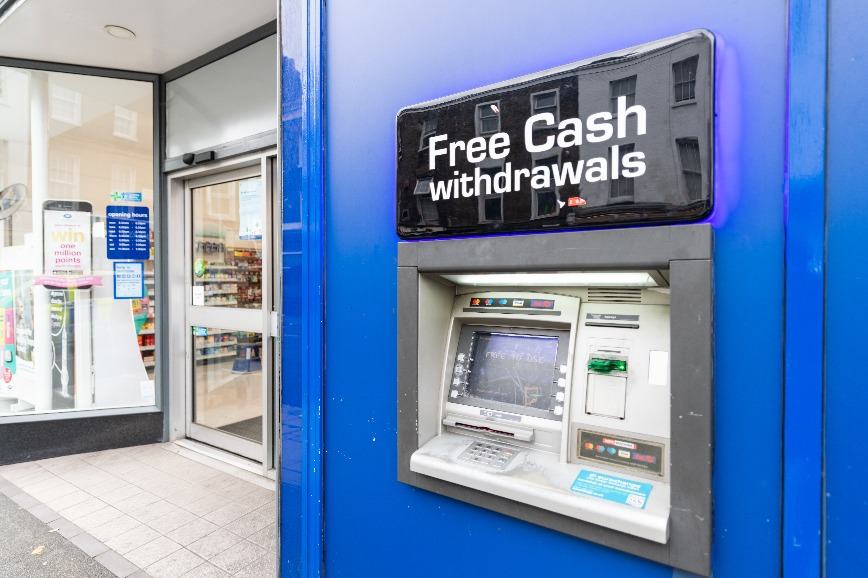
LINK, the UK’s main cash machine operator, reported a 37% drop in the number of ATM cash withdrawals in 2020, a significant fall. But that is still £1.6 billion withdrawn each week - £1,500 for each adult. With nearly 8% fewer free-to-use ATMs and nearly 18% fewer pay-to-use machines, these figures are even more impressive. John Howells, CEO of LINK, the UK’s largest cash machine network, made the point that ‘the sharp decline in ATM use brings significant problems (the) drop in transactions places enormous strain on the cash infrastructure’.
In the last three years the overall number of ATMs in the UK has fallen by 13,000 to 54,400. Since the start of 2020, 3,300 free-to-use ATMs have closed. By the end of 2021 NatWest will have closed 639 branches, Barclays 605 and HSBC 82. Although the UK government has said it will introduce legislation to protect cash for consumers, there is no timetable for its introduction.
Which? demands swift action to safeguard cash
The consumer organisation Which? is concerned that, without action, these closures are happening with little scrutiny or oversight. In this context, it has recently called for the UK’s largest eight retail banks to commit to maintaining membership of LINK and the Post Office Banking Framework until the legislation is in force. Members of LINK abide by the Financial Inclusion and the Protected ATM programmes, which seek to keep in place access to free cash in the most deprived areas. If banks remain part of the Post Office Banking Framework, then their customers can perform basic banking services at Post Office branches using their bank cards.
Which? estimates that 10 million people are not in a position to give up using cash in the UK. Although potential alternatives to access to cash have been put forward, for example cashback without purchase from shops, Which? is concerned that once free-to-use ATMs and branches have gone, it will be difficult to reintroduce access to cash. It wants the government to set out its legislative the timetable and to give one body responsibility, Financial Conduct Authority (FCA), to oversee the protection of cash in the UK.
Why Which? is demanding legislation
In September the FCA introduced new requirements on banks to assess customer needs and consider the availability and provision of alternative arrangements where closures or conversions are planned, because of its concerns about the impact of branch closures on the public. Banks that press ahead with branch closures have to demonstrate that they have actively followed the September guidance. Otherwise ‘they should consider pausing or delaying new branch closures where possible, particularly where this could have significant impact on vulnerable customers’.
The recent HSBC announcement that it will close 82 branches between April and September has been made in line with this requirement. Its announcement emphasised that customers can either use a Post Office, 81 of the branches are within one mile of a Post Office, and two-thirds are within five miles of another HSBC branch.
It also gave the context that the number of customers using branches has fallen by a third in the last five years. The willingness of customers to interact differently is reflected in over 100,000 customers a week engaging on social media and 90% of contact with the bank being over the phone, internet or smartphone.
In future HSBC plans to have four distinct branch formats: full service; cash service for communities that are more cash intensive; digital service focused on offering selfservice technology, and pop up branches. HSBC has, therefore, complied with the requirements and has given the context for them. It reflects their commercial reality and the challenge of how to maintain credible levels of infrastructure in that context.
Same topic, different campaign
A Which? survey of 2,000 people has highlighted a major factor behind the drop in UK cash usage, namely the behaviour of retailers actively discouraging its use. The survey reported 34% of people being unable to pay with cash at least once since March 2020.
Which? wants the FCA to have to track how many businesses accept cash and the rate of change. It is also working with retailers to protect consumers who want or need to continue shopping using cash.
Which? Money Editor Jenny Ross is pressing the government to act quickly. ‘We have repeatedly warned about the consequences that coronavirus will have on what was an already fragile cash system, but nowhere near enough action has been taken by the government or the regulator to understand the scale of this issue,’ she stated.
UK coin usage drops
Anne Jessop, Chief Executive of the Royal Mint, said in a newspaper interview that the long term impact of the pandemic could be a 20% drop in coin usage as people turn to digital payments in the UK and around the world. She does not anticipate no cash, just less cash.
Innovating to deliver cash
Loomis UK, the cash in transit company, and Sonect, a Swiss technology company, are working together to allow consumers to have cash delivered to their homes or to be able to pick it up from a shop (‘click and collect’). A pilot starts mid-March at one location, Burslem in Staffordshire, with the aim of a national roll out after that. There would be no charge to the consumer and a purchase from the shop would not be necessary.
Subscriber content
Read the full article
Full access to Cash & Payment News articles, newsletters and archives.