
Going Contactless

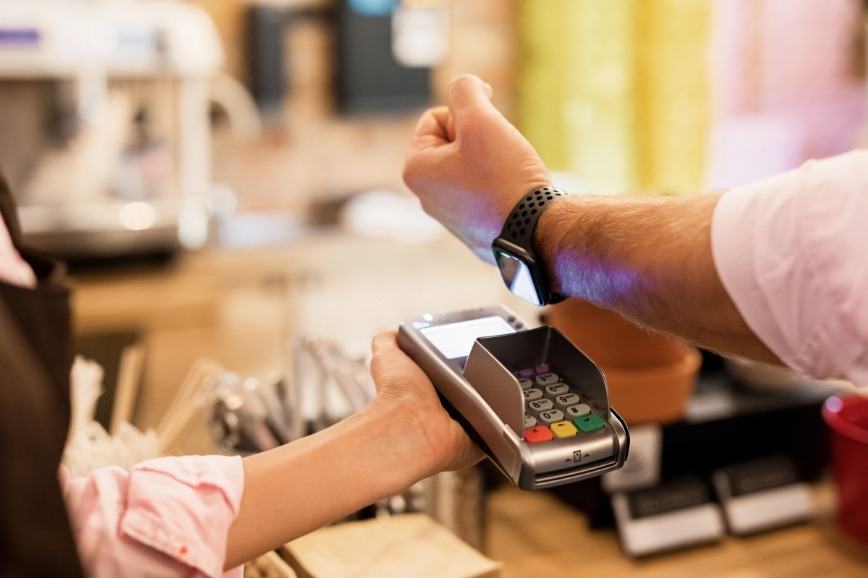
On 15 October 2021 the UK raises its contactless limit to £100 from £45. It also raises the cumulative transaction limit to £300 before a PIN must be entered 1. An article by thefintechtimes.com, based on data from www.money.co.uk, put this change in context. This increase means the UK now has the highest contactless limit in Europe and the seventh highest in the world. Perhaps it is no surprise that four of the highest contactless limits are in Asia, but it is a surprise only one is in Europe. The article went on to suggest the top 15 countries leading the move to electronic payments.
Worldwide contactless limits
The 10 countries with the highest contactless payment limits in the world:
1. Canada - 250 CAD (£147)
2. Japan - 20,000 JPY (£130)
3. China - 1,000 CNY (£110)
4. Australia - 200 AUD (£110)
5. Singapore - 200 SGD (£107)
6. New Zealand - 200 NZD (£102)
7. United Kingdom - £100
8. United Arab Emirates - 500 AED (£97)
9. Bahrain - 50 BHD (£94)
10. Hong Kong - 1,000 HKD (£92)
It would be interesting to know the experience of these countries with contactless payments and whether the fears of crime and over-spending are well-founded.
There is an excellent infographic that gives a global overview here.
Who is moving to e-wallet and electronic payments?
Using data from the World Bank and the largest debit and credit card providers, thefintechtimes.com created an indexed based on five factors to give each country a score out of 100 to represent their view of which countries are on the move fastest to paying with e-wallets and electronic transactions rather than cash. The factors were:
% of population (aged 15+) with a credit card
% of population (aged 15+) with a debit card
Contactless payment limits
Number of major e-wallet operators available
Number of ATMs per 100,000 adults
The top 15 countries were, scored out of 100;
1. Canada: 79.1
2. Hong Kong: 76.8
3. Singapore: 76.2
4. New Zealand: 75.0
5. Japan: 74.1
6. Australia: 72.3
7. Norway: 72.2
8. United Arab Emirates (UAE): 72.1
9. Switzerland: 70.9
10. Finland: 70.0
11. UK: 68.1
12. China: 66.0
13. Sweden: 64.9
14. Denmark: 64.6
15. Netherlands: 64.1
Interesting that five of the top six are in Asia with the first European country only in seventh place. Asia and Europe tied at seven countries each with only one, the UAE, outside those areas.
Two results stand out in this list, Japan and China. Japan because it remains such a big user of cash and China because of its rapid journey away from cash. An explanation may be this article focuses on the use of wallets, and that may also explain why Sweden, Denmark and the Netherlands are relatively low in this list. It regarded the top five wallets as Apple Pay, Google Pay, Samsung Pay, M-Pesa and Alipay.
Advantages and disadvantages of electronic payments
The article suggested some advantages and disadvantages of electronic payments. The advantages were,
They create a digital paper trail so that money laundering and tax fraud are harder.
They make payments abroad convenient.
They save time for merchants because they get rid of back-office tasks such as reconciliation and cash movement.
They reduce crime since the illegal drug trade and modern slavery are heavy users of cash.
The first and the last of these appear to be the same thing. The article acknowledges that criminals use the dark web nowadays. For the law-abiding consumer, the second advantage is relevant while the remainder perhaps have little obvious benefit.
The disadvantages suggested were;
Tech-lag, knowledge or access, can leave people behind.
If people can’t access credit or debit cards, they face exclusion.
Reliance on systems not going down or people making mistakes.
Vulnerability to cyber-crime.
Over-spending.
Online fraud.
Final thought
At first glance it appears the disadvantages have real substance for the consumer. One has to assume that the convenience of non-cash payment means, along with a lack of fear of crime, combined with the pursuit of the commercial interests of the private sector and the wish of governments for the adoption of digital payments, has out-weighed the disadvantages leading to the growth in electronic payments that we have seen.
1 - The UK government is increasing protection of purchases made using contactless cards by moving those purchases inside the protection of Section 75 of the Consumer Credit Act, which currently covers people for single items worth £100 to £30,000 purchased using a credit card.
Subscriber content
Read the full article
Full access to Cash & Payment News articles, newsletters and archives.