
What Does the Future Hold for Payments?

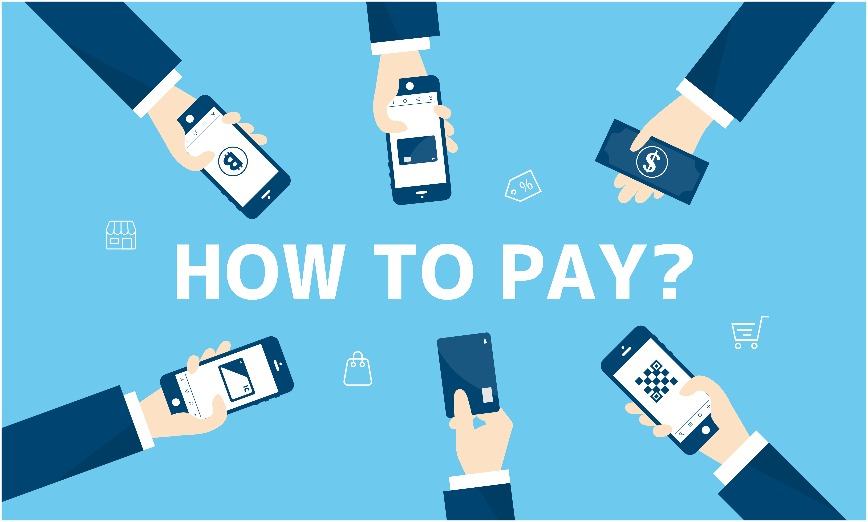
Last year, the International Banknote Designers Association (IBDA) held a virtual conference. One speaker, Dr Franklin Noll, presented his thoughts on how we’ll be paying in ten years time. Future gazing is always an interesting task and Dr Noll laid out a busy payment landscape for us to consider.
In 2031 the assumption is that we will still have physical wallets. There may be four items in those wallets, two familiar and two not. First, we will still have banknotes and coins for those few circumstances where cash is still required. We are also likely still to have debit and credit cards, although the presentation suggested they will have worked hard to move the population to using apps on mobile phones. Given people like the familiar, perhaps a reasonable assumption.
What we may not recognise are the ‘hybrid banknotes’ and Central Bank Digital Currency (CBDC) cards. The hybrid note Noll sees as having the capability of interacting with electronic devices, whether loaded with CBDC or cryptocurrencies. A number of organisations are exploring this approach already, so perhaps this is not such an outlandish idea. Equally much of the CBDC design work is around physical wallets to hold CBDC.
Noll then looked at digital wallets. He makes the bold assumption that rather than having to have multiple wallets for all the different solutions that exist, one app will exist which will give users access to multiple solutions.
He then went on to categorise what they hold into store of value and payment tools. The store of value tools were either cryptocurrencies, and he named bitcoin as the ‘winner’ rather than one of the thousands of alternatives, or non-fungible tokens (NFTs). NFTs are tokens that represent a tangible assets. They can either represent the entire assets or divided into shares of that assets (in which case they are fractional NFTs).
The payment options are more numerous, starting with CBDCs. He saw these as being used for payment transactions rather than as a store of value based on a core ledger held at the central bank, accessed through application programmable interfaces (APIs) by payment interface providers who register users so that they can use the CBDCs.
Noll then considered four types of token starting with stablecoins. Stablecoins have value based on a link to a tangible asset.
He saw these, therefore, as likely to be the preferred payment token because they will be easily exchangeable, trusted and flexible. Interestingly, some recently published literature has suggested that if CBDCs happen, then the business case for stablecoins is undermined.
The last three tokens are target, remittance and Internet of Things (IoT) tokens. Target tokens are those issued by retailers or manufacturers for their shop or product.
Private companies issue them at a discount to be used to buy their products in the future. Remittance tokens are designed for quick, easy and low cost cross border movement of value. Finally, IoT tokens may be necessary to interact with machines and applications.
In the past we have had many denominations of coins and banknotes, cheques, postal orders, bankers drafts and bank transfers. We then had debit and credit cards followed by telephone banking and online banking. Most recently, wallets and apps. Cryptocurrencies have arrived as well.
Today’s older generation were familiar, and comfortable, with the first list. The baby boomers with both the first and the second lists. Today’s younger generations recognise cash but choose from the second and are moving to the third. Perhaps Noll’s list for 2031 is more likely than it at first appears!
Subscriber content
Read the full article
Full access to Cash & Payment News articles, newsletters and archives.