
Cash – a Backstop for Freedom

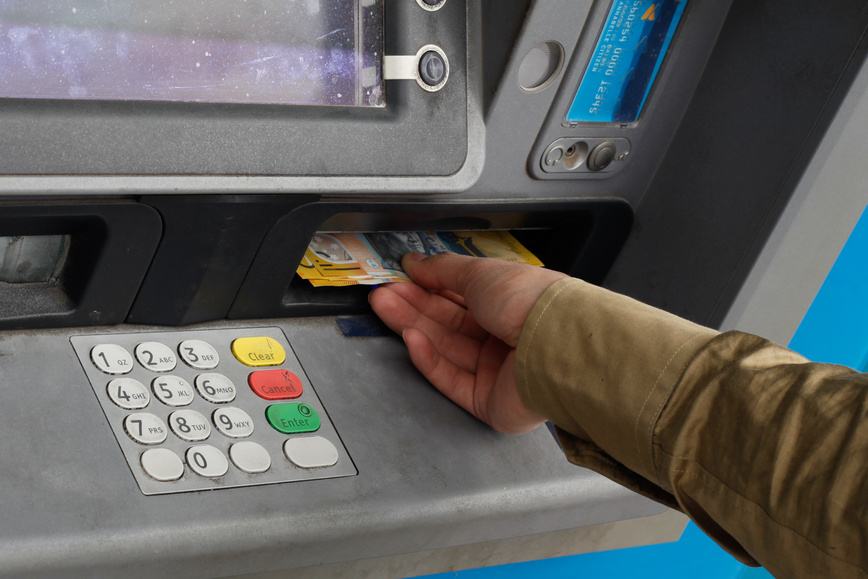
Let’s talk about Canada’s Prime Minister Justin Trudeau, the Chinese Communist Party (CCP), the UK’s Brexit campaign leader Nigel Farage and cash. Cash, of course, being a key part of the payment system driving economic activity around the world.
What is business for?
Since the creation of the limited liability company there has been debate about what companies in particular, and business in general, are for. Every time there has been a scandal caused by fraud, neglect or bad faith actions; this debate has come into sharp focus.
Charles Handy, the famous writer and academic specialising in organisational behaviour and management, wrote a Harvard Business Review Article (HBR) in December 2002 1 and said, ‘The purpose of a business, in other words, is not to make a profit, full stop. It is to make a profit so that the business can do something more or better. That ‘something’ becomes the real justification for the business. Owners know this. Investors needn’t care.’
In October 2021 another HBR article on the creation of meaningful corporate purpose quoted Simon Sinek’s TED Talk about how great leaders inspire action 2. As Sinek said in that talk, ‘People don’t buy what you do; people buy why you do it.’ The article goes on to champion purpose-driven organisations.
Perhaps little surprise, therefore, that in July 2022 the British Standards Institute (BSI) introduced ‘PAS 3 808: Purpose-Driven Organisations: Worldviews, Principles and Behaviours’. This is a guidance document for governing bodies and executive management, rather than a standard. Often such documents are the forerunners of later standards. PAS808 has been created because, BSI says, ‘There’s a growing imperative for organizations to reassess how – and in essence, why – they do business.’
Needless to say, such guidance or diktats apply to banks along with any other business.
Canada
So far so good. But what happened in Canada in February 2022? Canadian truckers blocked the streets of many Canadian cities over regulations about compulsory vaccinations. A key element of the government’s response was to freeze the bank accounts of about 200 individuals driving those trucks and organising the protests. The Emergencies Act, passed into law in 1988, which had never been used, was invoked.
In other words, one of the most liberal countries in the world sought to break a protest by stopping people’s ability to pay.
China
The government of China introduced a social credit system in 2011 that tracks and records businesses, individuals and government institutions evaluating them for trustworthiness. It is an extension of the existing legal and financial credit rating system, and it is managed by the National Development and Reform Commission, the People’s Bank of China and the Supreme People’s Court.
Whether the system is benign or not, it is an example of an active state systematically collecting and evaluating detailed payment and bank account information across society.
As an aside, it was reported that during 2019-20 Hong Kong democracy protests, people bought their travel tickets using cash so that the payment system could not be used to prove they had taken part.
United Kingdom
Nigel Farage led the successful campaign to get the UK to leave the European Union. As a result, a significant number of people regard him as an extremist, a populist and a generally bad person. He banks with a small bank, Coutts and Co., who are part of the much larger NatWest banking group which is still 39% state owned, having been bailed out in the 2008/9 financial crisis.
Coutts informed Farage that they were terminating his bank account, one he had had with them for many years. Initially they gave no reason and then said it was a commercial decision. The since-resigned CEO of NatWest had dinner with a BBC journalist and gave him the impression that the account was being closed because Farage had not maintained sufficient funds in his account, in an egregious breach of customer confidentiality. All of this proved to be untrue.
The truth is that a faceless committee in the bank had reviewed Farage as a ‘Politically Exposed Person’, collected a dossier of press reports that suggested he held extreme views and decided that he did not align with their ‘values’.
Farage went public and has been vindicated in his claim that he was ‘debanked’ because of his personal views, arguing that banks are there to serve customers and make money, not involve themselves in ‘virtue signalling’. He has since launched a campaign to assist many thousands of others who have been similarly debanked for their political views or the nature of their business.
Forever banknotes
Farage is now a firm advocate for cash. He is clear that a society without cash is at the mercy of the state, as all of the above examples show.
Cash is, therefore, more than a payment system, it is a guarantor of freedom, the back stop of Freedom. There are many in Canada, China and the UK who are learning this lesson the hard way.
1 - What’s a Business For? (hbr.org)
2 - Creating a Meaningful Corporate Purpose (hbr.org)
3 - Publicly Available Specification (PAS)
Subscriber content
Read the full article
Full access to Cash & Payment News articles, newsletters and archives.