
WBS Lays Out a New Cash Future

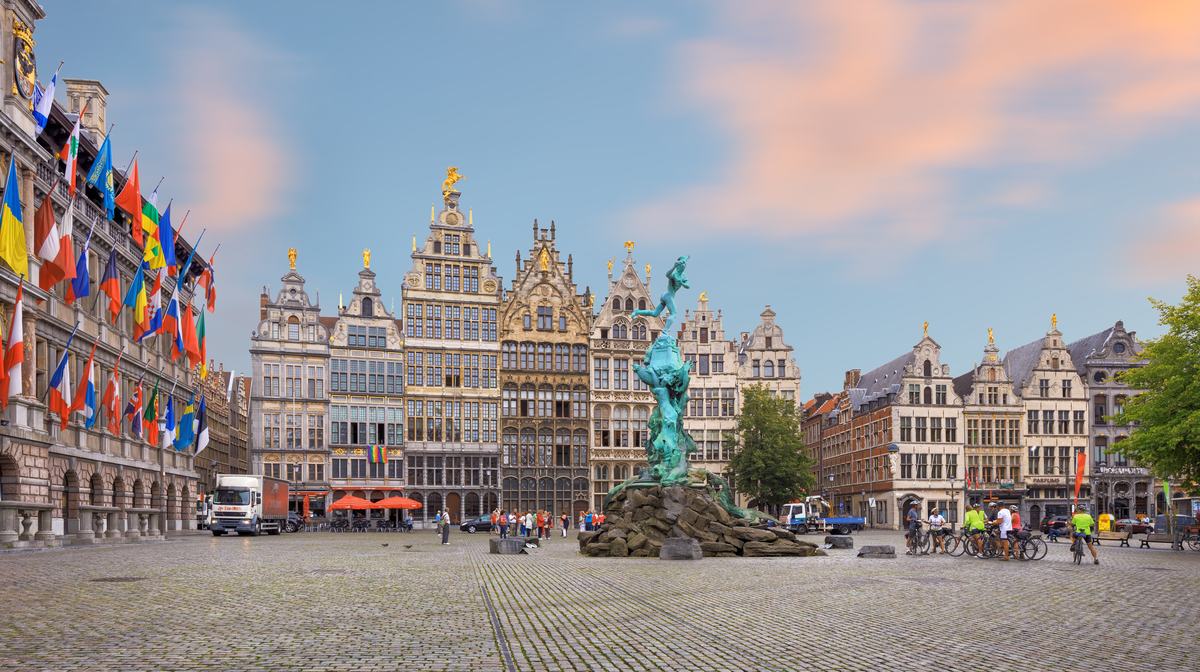
The 2023 World Banknote Summit (WBS) took place in Antwerp and was structured around three key areas – the performance of cash in a crisis, the sustainability of cash and the future outlook of cash.
While there was a slight European bias, the topics, lessons and discussions had a global relevance.
Thoughts on a digital euro
The keynote address was delivered by Tim Hermans, Executive Director at the National Bank of Belgium. Much of his talk covered CBDCs, albeit in the context of digitisation in the Eurosystem.
Mr Hermans reiterated the point that for there to be confidence in digital commercial money, people need to know it can be moved back into physical money. He did not address the question about whether there is a tipping point below which the cash infrastructure becomes unviable. The need for universal digital roaming access as a pre-requisite for a digital life was touched on, but when and how that would be achieved was not discussed.
A digital euro is being investigated because of the changing landscape of European payments. Mr Hermans highlighted that cross-border payments within Europe are a problem, with significant dependence on external providers, primarily Visa and Mastercard. Europe needs strategic autonomy in this area.
A number of the advantages of cash were discussed in the context of the challenge of a CBDC replicating them, particularly the anchor role of fiat currency for monetary confidence and privacy. The benefit of programmable money was also highlighted, a possible capability of a CBDC. No comment was made about how a CBDC might fulfil the store of value function of cash.
The assumptions prompted the question about whether the public will actually trust what they regard as part of government, a central bank, more than a payment service provider to handle their data and whether people, particularly younger people, feel the need for cash as a value anchor.
An excellent introduction to the conference that both informed and provoked thought.
Cash in crisis
The National Bank of Ukraine and Poland spoke about cash in a time of war, and these presentations have been reported on in February’s edition of Currency News™.
Banca d’Italia reviewed how well its cash management system had coped during the pandemic and Professor Franz Seitz laid out the importance of cash in managing crisis from the Great Depression through to Greece’s financial crisis and then the pandemic.
Korean perspective and planning
Wankeun Park from the Bank of Korea (BoK) explained their work to ensure cash availability in the event of war or disasters, whether natural, social or technologically based.
BoK has business continuity plans at the bank and departmental levels. The planning is based on a range of scenarios. The plans are exercised to ensure they work, and people know what to do.
The plans cover moving to back-up offices and IT centres, staff working from home and identifying how to substitute staff to ensure core work gets done. The practice and training is mainly focused on maintaining the continuity of cash services and ensuring that each participant in the cash cycle maintains appropriate levels of cash stocks. As part of the preparation for war, there are plans to evacuate cash stocks. BoK has a reserve currency design ready in case of the unexpected.
During the pandemic BoK adjusted its cash services according to the spread of the disease. This included the sterilisation of cash by placing it in isolation for two weeks. BoK experienced increased demand for banknotes but a reduction in demand for coins. Cash issuance more than doubled in 2020 and 2021, especially the highest denomination note. As a result, it had to print more banknotes. BoK also managed cash withdrawals and deposits of financial institutions.
BoK has improved its cash storage management, which helped it respond to a significant inflow of currency in late 2022.
Mr Park’s three take away thoughts were how challenging communications with the public are, the importance of having a safety buffer of cash, and the ability to switch staff between roles and the need to be conservative when doing risk assessments.
Sustainability at scale
Mr Sinha, Director Human Resources, Security Printing and Minting Corporation of India Limited (SPMCIL), described the organisation’s sustainability ambition and work. SPMCIL is working on achieving a number of United Nation Sustainable Development Goals and reducing its carbon footprint.
Detailed plans and actions
The presentation laid out a detailed plan to reduce SPMCIL’s impact including:
Using a carbon footprint model (score card) to reduce the embedded carbon in the products.
Monitoring the carbon footprint used to produce banknotes from start through to compost. This involves an analysis of key factors, from the raw material to customer delivery.
Looking to substitute cotton by alternative fibres such as abaca. Other alternative plants, such as eucalyptus, alfa, hemp, jute, kapok, sisal are being considered.
Installing a biological purification plant for water to clean and reuse process water. The water is used not only for paper production but also for cooling the factory and generating renewable power. A microbial study of paper machine back water system is being carried out.
Using 100% renewable electrical power. SPMCIL is commissioning solar panel installations at its production sites. It carries out regular energy audits and has installed energy efficient motors at production units. All fluorescent lamps have been replaced with energy efficient lights and LED lamps and all streetlights in SPMCIL units run on solar power.
Replacing oil-based heaters by solar water heaters at the air conditioning plant. LPG gas is being used instead of furnace oil for the paper mill boiler. Only railway wagons are now used for banknote transportation.
Shredding and disposing of used blankets instead of burning them. Nylon plate burning has been discontinued and they are now chopped into small pieces and diluted in water. Used machine oil is recycled. The quality of cotton comber has been improved by minimising the trash content in it. Production units are now reusing ink drums, tins and cans.
Reducing, removing or recycling plastics used in packaging products where possible, including ensuring any plastic that is used is recyclable at the end destination.
At the end of life recycling and reusing waste through treatment processes such as:
Cellulose acetate from shredded paper waste
Cotton waste as brick material
Cotton waste pyrolysis
Paper waste is briquetted and used to make boards.
80% of the waste is now recycled.
Natural habitat and biodiversity are considered for development of any new facility. For every tree that is removed, two or more may be planted.
Print management software and virtual meetings are used to reduce printing materials. Green procurement and certification are in progress. An annual mass tree plantation on Environment Day has been introduced as part of educating employees on behavioural aspects for reducing the carbon footprint.
Substrate selection
Durability is a major determinant in the environmental impact of banknotes. SPMCIL favours cotton as a substrate because it offers a range of possibilities for recycling and India’s climate. In terms of water and carbon, its footprint can be reduced further based on the choice of fibre used.
SPMCIL acknowledged the durability, security, cleanliness and water proof benefits of polymer but noted challenges such as being hard to fold, slippery to touch, the risk of fading, reaction to high temperatures etc. It also stated that it would pose a challenge for large scale circulation in a country with the population of India.
It was also claimed that polymer has higher greenhouse gas emissions than the paper equivalent, quoting data from www.moneyboat.co.uk comparing the paper and polymer versions of Bank of England currency.
Future outlook for cash
Retail bank view of payments
Diederik Bruggink, Head of Innovation and Payments at the European Savings and Retail Banking (ESRB) Group, presented the European vision and plans for cash and payments.
Context
Between 2017 and 2022 the number of bank branches in Europe fell 49% and the number of ATMs 3.1%. At the same time, cash in circulation (CIC) rose by 7.1% and CIC as a percentage of GDP by 4.7%. As the ECB study on the payment attitudes of consumers in the euro area (SPACE) found though, at the point of sale cash usage fell from 72% in 2019 to 59% in 2022.
Challenges and objectives
The presentation identified three issues facing Europe:
Access to cash and the acceptance of cash
Is cash a public good? Or a utility?
What does legal tender mean?
There is plenty of thinking about cash going on in Europe.
The ECB has its 2030 vision with five objectives:
1. Eurosystem ensures the issuance of cash.
2. Eurosystem supports access to cash services (withdrawals and deposits) for all Eurosystem Area citizens and businesses.
3. Eurosystem defines acceptance of cash as essential for the freedom of choice how to pay.
4. Eurosystem ensures innovative and secure euro banknotes.
5. Eurosystem ensures the health & safety of banknotes and endeavours to reduce cash’s ecological footprint.
The ERPB is working on a study about access to and the acceptance of cash. This will look at the societal costs and benefits of different payment instruments but will only go ahead if a representative number of participants will be guaranteed to take part. SMEs (small and medium size enterprises) need to be involved.
The ERPB believes cash is sustained by unique features for users, inclusiveness, budgeting, store of value, autonomy and privacy, and for payments, a back-up means of payment, legal tender and being public money.
Legislation
The European Commission (EC) is preparing legal tender legislative proposals and an Anti-Money Laundering (AML) directive. This is looking at a limit to large cash payments, excessive Beneficial Owner identification, limited outsourcing and an excessive list of subjects to PEP rules.
The legal tender discussion is in the context of the 2021 European Court of Justice ruling which allowed exceptions to cash being legal tender rather than acceptance being mandatory in all circumstances. Regulation is expected and cash availability may be included, and National Central Banks may be given a key role in determining what is allowed. The regulation is likely to be issued in parallel to digital euro legislation that will need to address the definition of its status.
The original cash limit proposal was a limit of €10,000 but there is now discussion about reducing this, across the whole Eurosystem area, to €3,000.
Future European payment mix
Diederik Bruggink also presented on the future European payment landscape, starting with noting that cashless payments had been increasing at a compound annual growth rate of 8.6% between 2017 and 2021.
Payment strategy
The European Commission set out in its 2020 payment strategy its goal of establishing European payment solutions that work cross-border, that are convenient and cost-efficient, operating in competitive and innovative markets delivering safe and secure payments and payment infrastructure. It wants to ensure unrestricted access and interoperability, European identity and governance and improved international payments. All this to support the international role of the euro.
Although the EC wants a retail payment solution that is European, domestic card schemes are struggling and Visa, Mastercard and JCB have two thirds of the market.
Only 20% of payments are made instantly in the European Union (EU) today. The EC is proposing that instant payments should be mandatory, that the charges for instant and ‘normal’ payments should be the same, there should be consumer protection methods, such as IBAN name checking, and sanction screening measures.
Unfortunately, there is no proper business model at the moment, one problem being that deposits are not earning enough.
Digital euro
The justification for a digital euro is predicated around its role as a monetary anchor, needing public access to a digital public money in a digital era and the need for strategic autonomy in the euro area.
One challenge is that consumers don’t want to pay to pay. There is a belief that people have the ‘right’ to free money and free payments.
It will be interesting to see the legislative proposal enabling a possible CBDC from the EC planned for the second quarter of 2023 and the ECB’s go/no-go decision on a future CBDC due in the third quarter of 2023.
Creating resilience in the UK’s wholesale cash sector
Elisabeth Bertalanffy-Fournier from the Bank of England presented on its work to ensure that the wholesale cash infrastructure remains resilient in the UK.
Context
The context for this works is the fall in the number of cash payments, which has now stabilised at about 15% of transactions. Linked to this is a reduction in retail access points and an increase in the unit cost of processing wholesale cash, driven by a cash infrastructure which was designed for high volumes and which has high fixed costs.
The Bank’s presentation said that for about 25% of people cash is an economic necessity, 5 million people rely on cash day to day, 17% would struggle with a cashless society and for 21% of people cash is their preferred payment means.
Plan A
The Bank set up a Wholesale Distribution Steering Group (WDSG) in May 2019, but in December 2021 the WDSG found that it was not able to pursue a utility model for cash infrastructure because agreement was not possible about a business model.
Instead, industry commitments about effectiveness, resilience and stability and voluntary reporting and monitoring have been agreed. The rule book for the Note Circulation Scheme is being reviewed with the intention of creating opportunities for innovation.
Companies will be held to account to their commitments, with regular reporting on agreed metrics and monitoring.
Legislation
The Financial Services and Markets Act 2022 (FSMA) is currently going through the legislative process in Parliament. Royal assent, the final step in law making, is planned for the second half of 2023. The FSMA is seeking to ensure that the UK population will continue to have access to cash and the ability to deposit it.
The Act sets geographical requirements for being able to access and deposit cash, a clear designation of responsible firms such as the largest banks and building societies, and gives the Financial Conduct Authority responsibility for regulation of the sector.
Part 5A of the Banking Act requires the Bank to have market oversight of wholesale cash distribution and critical service providers. This is a new and unfamiliar role for the Bank. Prudential supervision of significant entities is involved, a role familiar to the Bank.
Outstanding questions include whether it should be mandatory on banks to offer and provide cash services and, if the government supports digital payments and their adoption and acceptance, why should cash be treated differently?
An outsider’s perspective
A speaker from Pricewaterhouse Coopers (PWC) looked at payments through a different lens. Financial services are not about banks but banking. People don’t buy insurance; they buy peace of mind. Payments need to be simple, convenient, instant and ‘embedded’, part of everyday life.
PWC argues that consumer reasons for using cash are weakening but, for now, the preference for cash is stable. This preference seems to bottom out at about 20% of the population, although at a lower level for younger people. The data for under 35 year olds relative to the general population for their preference for cash is about two percentage points lower.
One in five people in advanced economies shop without taking a wallet or purse with them at all. Banking apps are increasingly relevant (embedded) given the advantage to Fintechs relative to traditional banks. Research shows an increasing willingness of people to bank with non-bank players. While in Germany that figure was 27%, in Turkey and Switzerland the figures were 72% and 48% respectively.
PWCs presentation was the last of this session and it offers food for thought about the cash challenge in changing societies.
Subscriber content
Read the full article
Full access to Cash & Payment News articles, newsletters and archives.