
Bringing Futures Literacy to the Future of Money

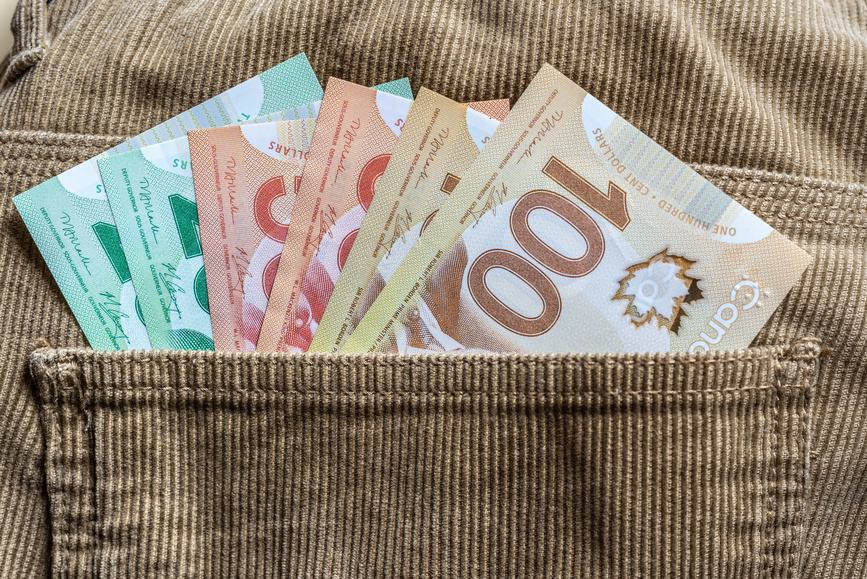
Cash Essentials has issued a report, ‘The Role of Cash in the Future Monetary Landscape’. Based on a Futures Literacy Lab hosted by Cash Essentials in collaboration with the UNESCO Chair for the Future of Finance at Ecole des Ponts Business School, in September 2022. The paper lays out how a Futures Literacy Lab works and seeks to understand the future of money.
The nature of money
The paper lays out the challenge facing cash and of trying to imagine future payments. It makes the point that money is not, and never has been, constant. It continues to evolve with the current digitisation phase being but one part of a continuum of change. Despite the diversification of form, there is an underlying continuity of functions of the different components of the monetary landscape.
There are four key constant properties of money:
An issuer, which may or may not be a central bank
Its form, which may be electronic or not
How accessible it is, whether it is universal or not
Acceptance, for example whether that is peer-to-peer or not.
Any future money is likely to continue to have these properties.
Why imagining the future is hard
We are constrained by what we know and experience today. This is made even harder because our efforts to extrapolate the past into the future fail to take into account the on-going changes in societal conditions.
Our ability to anticipate future processes and systems are fundamentally constrained, leading to a collective ‘poverty of imagination’ that limits our ability to imagine a truly different future for money. We struggle to leverage our imagination to question the present, seeking refuge in the comfort and affirmation of what we already know. This inability to imagine a future beyond incremental versions of the present leads to and supports a narrative that the digitalisation of money is ‘inevitable’.
Futures Literacy Lab: process
The Lab built on Cash Essentials’ 2021 report, ‘The Future of Cash? A Novel Approach to Re-Imagining the Future’. That report concluded that even if a future without cash is possible, it is not probable, nor desirable, as it would create a number of negative outcomes, including in terms of efficiency, inclusion, fairness, resilience, and the protection of privacy.
The Lab’s goal was to co-create and re-imagine new futures to address the roles and responsibilities of key stakeholders in contributing to shape a sustainable future monetary landscape.
It took the participants through four phases designed to implement collective intelligence methods that ‘use the future’ to enable participants to understand key limiting assumptions underlying their ability to imagine the future.
Phase 1: Reveal – Participants shared their images of probable and preferable futures of the monetary landscape sector in 2050 revealing underlying, and often limiting, assumptions that governed their ability to imagine different kinds of futures.
Phase 2: Reframe – Participants engaged with a set of new and unfamiliar assumptions. It allowed reflections on a future that was not necessarily probable or desirable leading to the exploration of novel ideas and possible future roles of money. Participants could let go of the familiar images and, most importantly, suspend the habit of imagining the future as something that is likely or desirable to gain new insights.
Phase 3: Reflect – Based on understanding the assumptions that currently shape their images of the future, participants reconsidered their perceptions of the present, arriving at new formulations of the problems and questions.
Phase 4: Next steps – Participants sketched out avenues for stepping-up to the challenges of our times.
Examples of how this work were discussions around ‘no cash accepted’ signs. They are a powerful manifestation of the dominant current narrative for the future of money. By revealing the underlying assumptions behind these signs, it became clear that, far from being a sign of innovation, they limited individual and collective choice and restricted the future to a single scenario. Anticipating, and claiming, the disappearance of cash has become a symbol of innovation and progress. Based on this understanding, the Lab sought to broaden the spectrum of choices for the future.
An important question that emerged in the design phase of the Lab was the time frame. In the cash space, the ‘usual’ forecasting period is 3 to 5 years and 10 years is considered as long-term, but innovation in new ways to pay has considerably shorter timescales. The design team chose a horizon of 2050 for the Lab.
This time frame is disconnected from current trends, as well as ongoing investment cycles. It allowed the participants to break free from the mindset of cash as a relic surviving from the past, and to see it as a part of a future monetary landscape, based on its potential role in scenarios that imagine both continuity and discontinuity. It is also a time frame that allows participants to more easily move beyond the ‘expertise’ bias that often limits the ability to think beyond ‘probable’ futures.
Discussions about the future
During the Lab, the discussion shifted to discussing the role of cash within society as whole. Exploring the ‘why’ of cash, as it were, as opposed to its ‘how’ or ‘what’, opened the discussion for cash to a more prominent role in the future, in terms of some of its most crucial intangible aspects: inclusion, social cohesion and anonymity.
One conclusion was that cash is not an obstacle to innovation, including the digitalisation of money. In fact, it provides a safety net that protects against the risks and downsides of digitalisation.
Need for leadership
Considerable effort is being made by the cash industry to achieve industrial efficiencies at scale and to defend existing markets and habits, as part of a strategy of continuity. But there must also be strategic engagement with discontinuity, including endings and beginnings.
The Lab participants argued that the cash community needs to take a leadership role, rather than a defensive or a merely reactive one. It needs to establish new roles and opportunities for cash to serve economic and social ends. There is a need to (re)design cash and formulate experiments that test ways to reinforce existing roles or play with new ones, rather than taking a defensive and fatalistic view of the future of cash.
The future
The Lab concluded that the future of the monetary landscape needs both cash and digital forms of money.
The major questions and challenges faced today by cash, access, acceptance, efficiency, sustainability, resilience, were not called into question. Indeed, the Lab reinforced the view that taking on these challenges in the name of ensuring the diversity of the monetary landscape continues to be important.
The Lab emphasized that Cash is more than just a payment instrument and a store of value. These attributes need to be integrated into the discussions on the monetary ecosystems of the future.
The Lab identified a need to broaden and deepen the conversation around cash, money and payments. Not merely as technical and technological tools, but as part of the pervasive and constant changes taking place in the world around us.
Subscriber content
Read the full article
Full access to Cash & Payment News articles, newsletters and archives.