
Time to Get Real

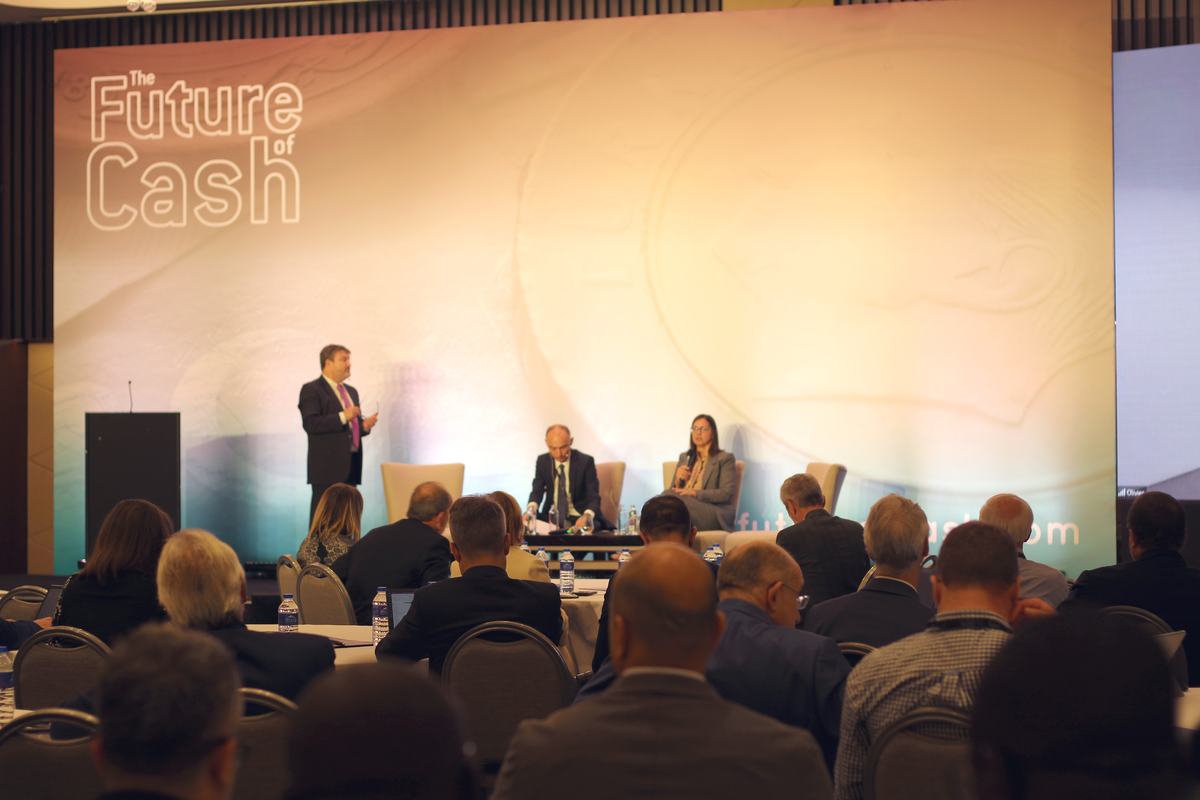
The Future of Cash conference was one of those rare opportunities to step back and think. A series of experts presented data, research and conclusions from the real world about cash and its role in the payment hierarchy.
Some reflections about the conference make slightly uncomfortable reading. Perhaps they are wrong. On the other hand, a debate about them, and what to do about them if agreed with, would be healthy. Readers of Cash & Payment News™ are very welcome to write in with their thoughts!
Observations
The cash challenges. The two big issues for cash are the gap between people saying they value cash and the fact that they use it less and less, and the lack of data on what payments really cost society, banks and, most importantly, merchants (who pass it on to customers).
The ‘distraction’ of access to cash. There are now plenty of examples of how different countries are addressing the challenges of maintaining access to cash for those who need it. Central banks are clearly comfortable in this area and focusing on cost and efficiency is familiar territory for commercial banks, cash management companies and cash in transit companies. In a sense, this is a form of displacement activity that distracts from the real challenge that cash is fading away.
Cash in the context of the digital gap. The digital transition is a major challenge for society. Across every society the figure for those who are not ready for a digital world is never less than 10%, and 20% is frequently cited. These are very significant numbers of people. The cash ‘question’ is urgent because of its role at the heart of every person every day. This is a powerful lever for cash which, somehow, isn’t accepted as legitimate by the ‘modernists’ (cash is the horse and cart holding back the new, efficient, safe future).
The gap between threat and action: part 1. Sweden is very clear that cash is needed for a resilient society. This is not just about outages, but about real disaster scenario risks up to and including war. It is open that it let cash fade away too far and too fast and that restoration is much harder than maintenance. Other countries appear not to hear the message and appear unwilling to go far enough, fast enough to avoid repeating Sweden’s error.
The gap between threat and action: part 2. Part of the challenge is a refusal to address the cash acceptance challenge. While measures to maintain access are behind the scenes, largely technocratic, familiar and within the existing cash ecosystem, cash acceptance is not. It is political, public and imposes real costs on a fragile retail sector. It is easier to avoid the challenge than to address it, even though the longer it is avoided the less likely it is that cash can be maintained. Those at the Future of Cash conference are not well placed to address this challenge.
A lack of focus on payments. Why don’t we have the same deep dive into payments as we do into cash? Perhaps we could learn from understanding what is working and what is not in that space.
Learning from healthy cash usage. Understandably the focus at the FOC is on those parts of the world where cash is under pressure. Time is spent on understanding why and how to address the consequences. No time is spent on places in the world where cash is thriving and seeking to understand how cash is adapting in those countries. Many cash societies have evolved modern technology to that they work together, M-Pesa being the best known example.
We should study what has been done and look for new opportunities for cash to thrive in a digital environment. At the recent ATMIA seminar, Paycorp laid out how it had moved from managing ATMs to being a payment supplier across cards, point of sale equipment and more. It is an interesting example of looking at payments holistically. We need more of this as an industry.
Mending the roof when the sun shines. Many, if not most, Emerging Market Economy countries regard developing a digital economy as core to creating a successful, dynamic, competitive and successful economy. They are happy to see cash usage reduced and easily use the language of cost, crime and efficiency to justify this. There is a need to develop the case for putting in place safeguards for cash early so that as digital does increase, those dependent on cash are not left behind. There is a need to identify and calibrate the trigger points below which cash becomes endangered. Currency Research’s initiative, the Universal Access to Payments Initiative, is working on this but has not reported on their work for some time.
Language as a weapon of war. Brett Scott ran a session that looked at the framing of the conversation around cash (see page 2). He argued that the ‘war on cash’ had created a set of language and a narrative that had become part of day to day thinking. Those supporting cash have fallen into a defensive mindset that reacts rather than setting out its own story and framing the conversation along its own lines. There is a need and an opportunity to rethink and represent the case for cash by central banks, cash stakeholders and all those in society and the media who are concerned about the digital divide.
Working with the future. While CBDCs remain a ‘plan’ rather than a ‘decision’, perhaps this is the time to engage in CBDCs as cash, to think about and shape a future cash format. Should this be in the agenda of the FOC conference? As ever, what business are we in? Cash or payments?
Final word
Ultimately cash will thrive if it is convenient and useful. It has to work in a digital world co-existing with digital payments because it is valued by consumers and merchants for doing something that digital payments do not do.
If the cash industry cannot identify the gaps and work with technology to make cash convenient and relevant, the role of cash in the payment spectrum is likely to be less than it is today, that may mean that politicians need to take action to maintain cash, particularly if the ‘usefulness’ is to be the secondary fire staircase in a house seldom used but vital for safety.
While access is important, the immediate battle is acceptance. The real issue to get right is the fit of cash and digital and agreeing the role of analogue in a digital world. This is societal which means its political.
Subscriber content
Read the full article
Full access to Cash & Payment News articles, newsletters and archives.