
Why Do People Adopt and Use Mobile Money?

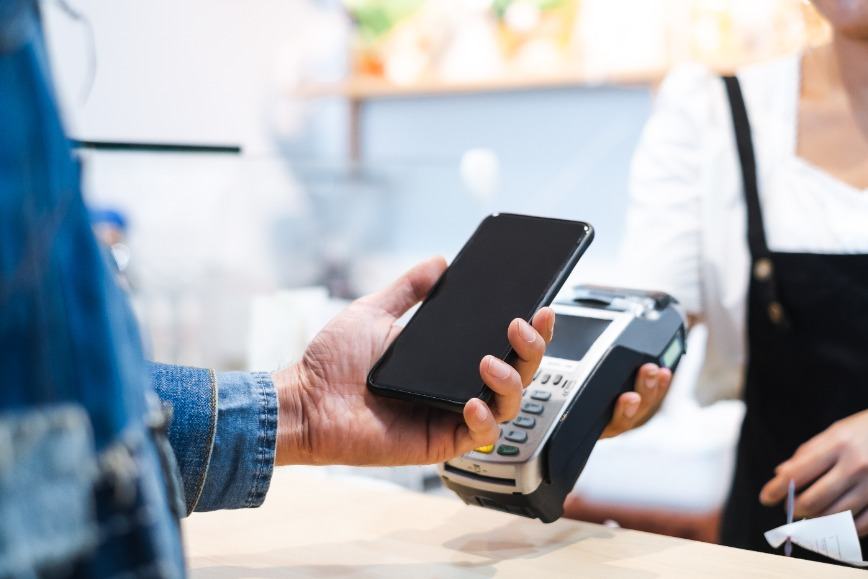
One thought that came from the Future of Cash conference was the need to understand digital payments more. A recent conference paper from Vietnam does just that as it examines why people in the developing world move to digital payments by studying the uptake of mobile money services in Vietnam 1.
The paper starts by arguing that digitisation generally helps offset some of the negative effects of globalisation, for example increasing education through e-learning, providing access to health care through web access, increasing commerce through e-commerce and the ability of fintech apps to increase social capital and social equality.
In Vietnam the use of bank accounts, based on the World Bank’s Findex survey, increased between 2011 and 2014 from 21% to 31% but stalled at that level in the 2017 survey (although the latest survey shows 56% having accounts). At the time 80% of Chinese adults had bank accounts and the Asia Pacific average was 70%.
The paper reports that the government has promoted mobile money services as a solution to this low uptake of bank accounts. It approved a mobile money pilot project to allow people to pay for small value goods and services using mobile money. In 2020 the government set a target of reducing cash transactions to less than 8% of all transactions and to increase financial inclusion by 2025.
Theoretical approach
The literature research identified nine other studies in this area around the world, in Ghana, India (2), Uganda, Pakistan, Oman, Germany, Jordan and Vietnam. It categorised these studies into Technical Acceptance Model studies, Theory of Rational Action studies and Unified Theory of Acceptance and Use of Technology studies.
The author had identified that money use in Vietnam is concerned with trust because of a fear of cybercrime and remote hacking. It is trust that explains any gap between adoption and actual use. It decided to include behavioural factors alongside technological and ecological factors in the study.
Hypothesis and findings
There is a positive relationship between performance expectancy and intention to use mobile money in Vietnam. Not proven: most users used mobile money to make payment or transfer cash in small amount but didn’t put a lot of money in the apps due to the risks of losing money. The limit on transferring or paying, around $1,200 a month, was set too low.
There is a positive relationship between effort expectancy and intention to use mobile money in Vietnam. Proven: effort expectancy did play a large role in the intention to use the mobile money.
There is a negative relationship between social influence and intention to use mobile money in Vietnam. Proven: there was an effect between social influence and the use of mobile money. (In the context of Vietnam’s mobile money, there is an increasing case of losing money when using mobile money apps in a third party app like Momo, and the people who lost money will have negative perception of recommending or using mobile money). Proven: There was an effect between social influence and the use of mobile money.
There is a positive relationship between facilitating condition and intention to use mobile money in Vietnam. Not proven: in Vietnam the facilitating condition had a negative impact on the behavioural intention. Few people received useful guidance when logging in or registering the mobile money applications. Even those who used mobile money were hesitant about putting their banking account details into the app due to the complicated process. The requirement to identify users also meant some users were not able to use the mobile money.
There is a negative relationship between perceived risk and intention to use mobile money in Vietnam. Proven: perceived risk was found to be a significant factor influencing mobile money use.
There is a positive relationship between habit and intention to use mobile money. Proven: the study found that using mobile money was affected by habit. Consumers using mobile money were likely to continue using it due to the promotion or game activities offered by application developers.
There is a positive relationship between awareness and intention to use mobile money. Not proven: there was no significant relationship between awareness and intention to use mobile money. This was attributed to the comparatively high weight of variables relating to awareness such as social influence, perceived risk, and structural assurance on the intention to use these payment systems.
There is a positive relationship between structural assurance and intention to use mobile money.
There is a negative relationship between price value and intention to use mobile money. Proven: there was a significant and negative relationship between price value and intention to use mobile money. Vietnamese use the mobile money system because of a perception of its benefits, but the benefits are low value in comparison with costs. It costs around 1.5% if they use credit card to pay using a mobile money app.
There is a positive relationship between behavioural intention and actual use of mobile money services.
There is a significant relationship between mobile money adoption and usage and financial inclusion in Vietnam. Proven: a strong link was found between mobile money adoption and usage and enhanced financial inclusion.
Trust significantly mediates the relationship between mobile money adoption and usage and financial inclusion. Proven: there was a clear positive link between mobile money acceptance and use and financial inclusion through trust.
Success factors
The report identified three influences that are important in consumer acceptance of new payment methods – price, social influence and the perceived risk.
To be adopted though, the new payment method needs to lower costs, for the benefits to be clear and well known and for the solution to function seamlessly. Adoption is one thing, sustained use and success requires the solution to be user friendly, trusted and for data to be secure.
Whatever aspect of digitisation is being discussed, the new solution must be convenient and enhance aspects of users’ lives.
There are lessons here for why people use cash, and key messages used to support cash.
1 - Nguyen, Luan-Thanh (2023): Financial Inclusion through Mobile Money in developing countries: the case of Vietnam, The second International Conference on Science, Economics and Society Studies, Ho Chi Minh City, 25th August 2023.
Subscriber content
Read the full article
Full access to Cash & Payment News articles, newsletters and archives.