
Access to Cash Pilots Pick Up Speed in the UK

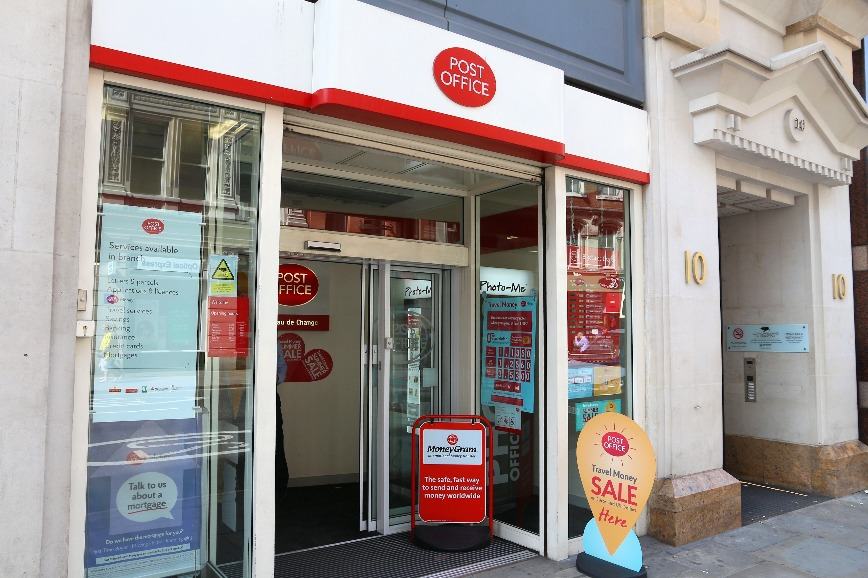
The UK’s Post Office is not a bank and does not aspire to be one. However, it does provide essential cash services on behalf of all banks to all communities left behind when banks close. The banks still have a duty to be available for more complex products – typically now served through call centres, or video calls.
Recognising that there is still a need for face-to-face customer service for those products, the Post Office has now opened two ‘utility’ banking hubs – called, unsurprisingly, BankHUBs - as part of the UK’s Community Access to Cash Pilots (CACP) in conjunction with the UK’s five major banks (Barclays, HSBC, Lloyds, NatWest and Santander) as part of a trial through to the end of 2021. One was opened in Rochford in England and the other in Cambuslang in Scotland, both towns without any remaining bank branches.
The UK’s Post Offices are on the high street, often located in areas that use a lot of cash. Even with that in mind, its Cash Tracker shows personal cash deposits and withdrawals up in March by 22% month-on-month and business cash deposits up 21%. Personal cash deposits were at an all-time high.
The concept has learned from a failed scheme a few years ago to create Business Banking Hubs. Barclays, Lloyds and NatWest opened six branches in three towns to provide shared facilities for businesses. The sites were unbranded and had very limited staff, being mostly fully automated. The trial didn’t capture the public imagination, unclear about what it was for or who was running it, so it was ultimately unsuccessful.
The new hubs are branded as Post Office BankHUBs and have a Post Office staff member on hand to serve customers for cash banking transactions at the counter, as well as supporting the automated equipment. In the hubs are machines for depositing and withdrawing cash and one or two meeting rooms. Each day one of the banks provides staff to meet their customers to provide traditional banking activities such as opening accounts, discussing mortgages, pensions, loans etc.
The first two hubs only opened in April and the trial will be evaluated after six months. Eight towns have been identified to participate in the CACP trial, only two of which currently have BankHUBs. They are funded by the CACP which gets its funding from the UK banks and Post Office.
The initial response to the BankHUB pilots has been encouraging. In Rochford, while there are not queues to use the Post Office counter, ATM and deposit equipment due to the speed of service, there are queues to meet with the bank representatives, suggesting a previously unmet need.
Cash deposits made by local businesses are of a higher value than had been made at the town’s Post Office. The theory is that businesses had been driving to other towns to deposit their cash but are now happy to use this facility. Counter-intuitively, the cash services at the actual Post Office branch in the same town have continued strongly as well, perhaps because people now know the Post Office offers cash services.
Martin Kearsley, Director of Banking for the Post Office, could envisage perhaps as many as 200 hubs being opened eventually, but a lot depends on how these trials go and whether future funding can be secured if they are not economically viable on their own.
The CACP initiative looks to address access to cash challenges in the UK by trialling initiatives such as this, the public being able to get cashback from shops even where no purchase is made, the installation of free-to-use ATMs if there are no alternatives and in given circumstances, and the adoption of solutions from Sonect (virtual ATMs) and Shrap (receipt of change to an app, rather than in coins).
The hidden benefits of cash
In a separate development, and again following the UK’s Access to Cash report, from October 2019 if a community has at least five shops and no free access to cash within 1 km, it can request a free-to-use ATM from LINK, which runs UK’s ATM network on behalf of member institutions. So far, the scheme has had 3,800 requests from the public and has installed 50 machines.
The ‘This is Money’ magazine recently reported on the opening of one of these ATMs just outside York. Before it was installed people had had to pay £1.50 per cash withdrawal from a pay-to-use ATM or go to a large supermarket and use ‘cashback’ when they bought something, which took business away from the small shops on the high street.
The article included a florist talking about introducing a minimum £4 card payment limit because it cost him more when people pay by card. 'The card machine has cost me around £800 since January – and that doesn't even include rental costs. Cash payments don't cost me a penny because the flower wholesalers are happy to accept cash payments, so I've not once had to make one deposit at the bank in the past ten years.'
Good response to cash-friendly pledge
Meanwhile, the UK consumer champion Which? has invited retailers to sign up to a cash-friendly pledge – and some of the largest retailers across the grocery, general merchandise and pharmacy sectors have now done so. Supermarkets with 4,500 outlets and a grocery market share of 30% have joined.
The initiative is supported by a range of associations from the British Retail Consortium, the Association of Convenience Stores, the British Independent Retailers Association and the Federation of Small Businesses. The Bank of England’s Chief Cashier, Sarah John, has supported it as well.
Which? had found that 34% of UK consumers had been unable to pay with cash at least once during the pandemic. It is calling for the government to legislate to protect cash and wants the Financial Conduct Authority to be responsible for cash.
UK banks commit to cash
Finally, UK Finance and the largest retail banks and building societies have signed up to five commitments to preserve access to cash for the public and businesses over the long term.
They will ensure that cash remains available for those who need it, when they need it; support the Community Access to Cash Pilots; establish and maintain a framework to enable the early identification of potential cash ‘cold spots’; protect current critical infrastructure until a viable alternative is available; and work together to consider possible models for future access to cash which address changing access requirements and meet the needs of customers and communities.
Subscriber content
Read the full article
Full access to Cash & Payment News articles, newsletters and archives.