
Financial Services in Africa

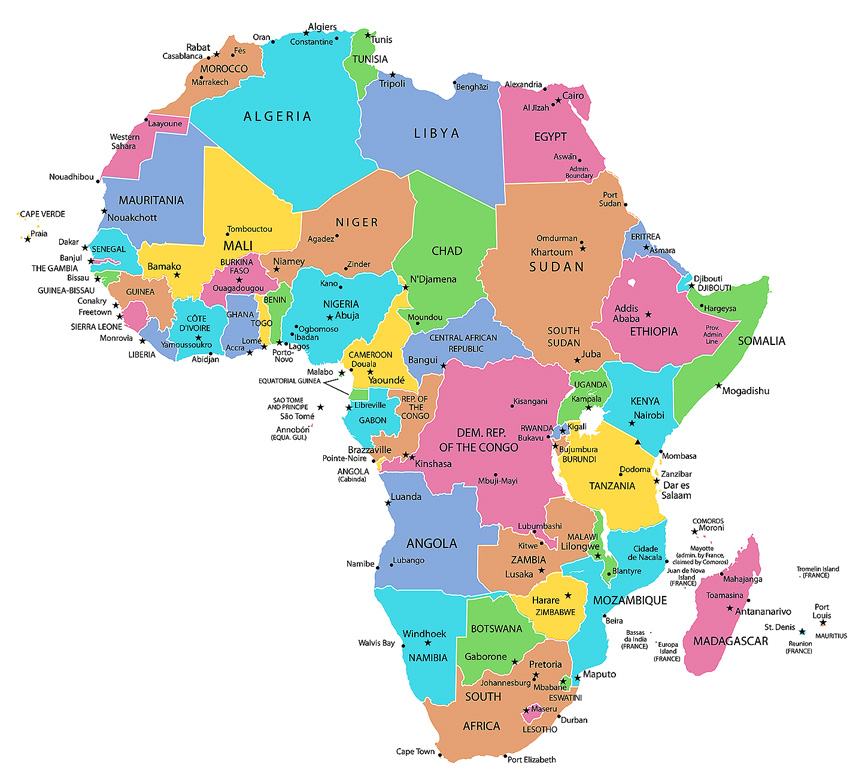
An International Monetary Fund (IMF) Financial Access Survey has confirmed that Ugandan banks are switching their spending to digital channels and away from branches and ATMs. There has been a slight drop in the number of bank branches, but a bigger drop in the number of ATMs, over the last six years. At the same time there has been an exponential growth in mobile money services.
The number of ATMs in the six years reduced from 4.31 for every 100,000 Ugandans in 2017 to 3.68 in 2022. The number of commercial bank branches fell slightly from 2.73 for every 100,000 Ugandans in 2017 to 2.34.
There has been substantial growth in the number of commercial bank depositors and borrowers, who in the six years to 2022 rose to 596.73 and 43.43 for every 1,000 Ugandans, respectively.
The report notes that depositors grew from 373.77 while borrowers grew from 31.27 for every 1,000 adult Ugandans respectively.
The number of registered mobile money accounts for every 1,000 Ugandans grew from 1067.69 in 2017 to 1,569.75, which is an indication that at least more than 50% of adults have two or more mobile money accounts. There were at least 2,391.71 mobile money agents located within a radius of every 1,000 km.
Regional comparison
At a regional level, the IMF report indicates that Kenyans have more access to banking service than their East African peers, with the country having more ATMs and commercial bank branches as a share of the population than Uganda, Tanzania and Rwanda.
For instance, for every 100,000 Kenyans there were 6.85 ATMs and 4.39 bank branches in 2022 compared to Tanzania’s 5.61 and 2.35 ATMs and bank branches, respectively.
Kenya also leads in terms of mobile money with the report showing that there are 2,176 registered mobile money accounts for every 1,000 adults.
Subscriber content
Read the full article
Full access to Cash & Payment News articles, newsletters and archives.